.avif)
.png)
.jpg)

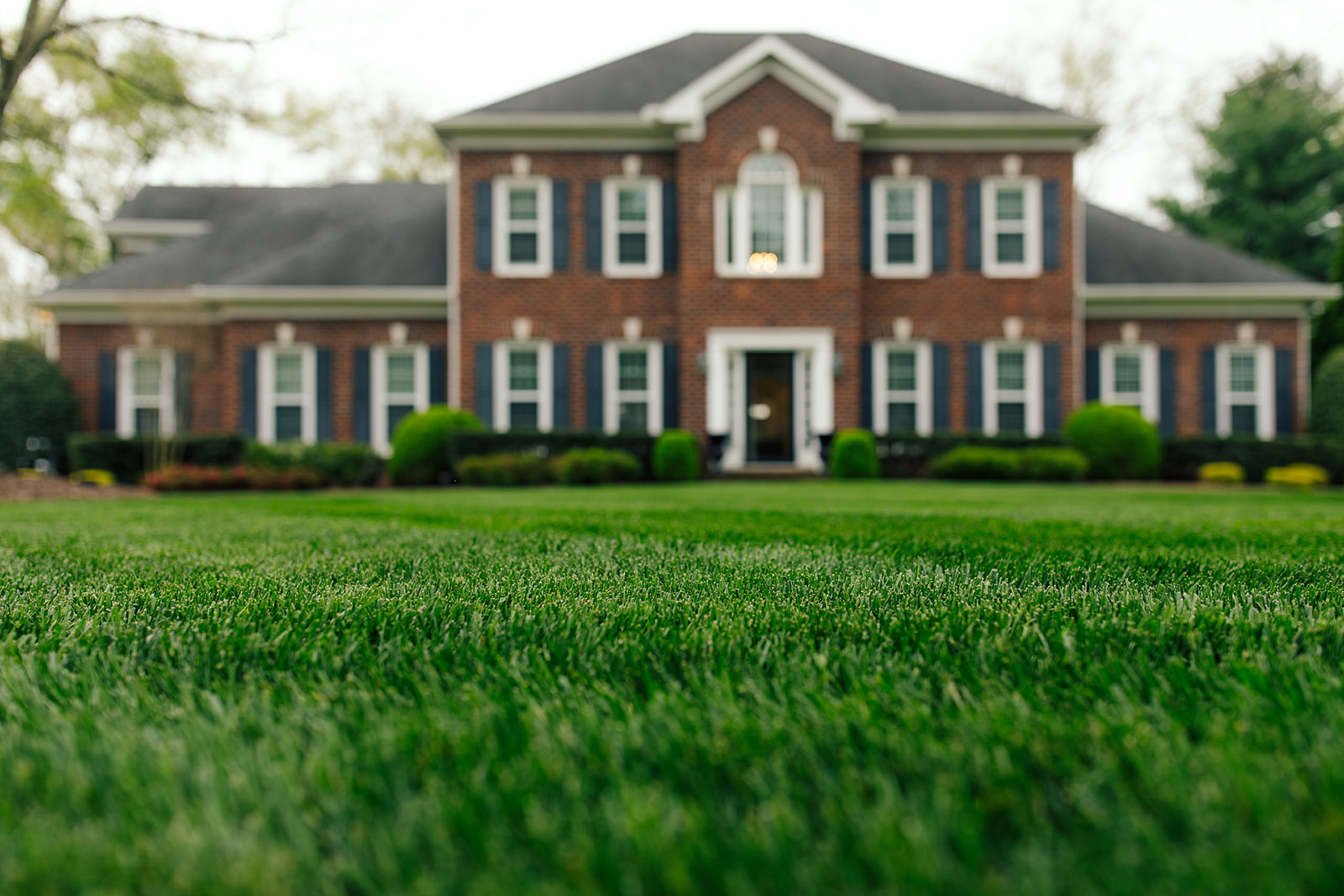
You fertilize on schedule, you water when it's dry, and the lawn still looks tired. Grass is thin along the path to the mailbox, rain puddles in the same low spot every time, and the ground feels like a parking lot in August. Before you blame the grass or the fertilizer, check what's underneath. In Middle Tennessee, the problem is very often compacted soil.
Why Clay Soil Packs Down So Easily
Most of our region sits on heavy clay. Clay particles are tiny and flat, and when they get pressed together they stack tight, squeezing out the air pockets roots depend on. Healthy soil is roughly half solid material and half open space for air and water. Compacted clay has very little open space left. Roots can't push through it, water can't soak into it, and the grass above it slowly runs out of steam.
Seven Signs Your Soil Is Compacted
1. The screwdriver test fails
This is the easiest check there is. A day or two after a good soaking rain, take a long screwdriver and push it straight into the lawn. In healthy soil it slides in several inches without much effort. If you're leaning your full weight on it and it stops after an inch or two, the soil is compacted. Test a few areas: the front yard, the back yard, the side yard, and anywhere the grass looks worst.
One caution: do this when the soil is moist. Any clay soil is rock hard in a dry August, compacted or not.
2. Water puddles or runs off
Watch your lawn during a heavy rain or while the sprinkler runs. If water pools on the surface, or sheets off onto the driveway before it has a chance to soak in, the soil isn't taking it. Puddles that hang around for a day after the rain stops are a strong sign.
3. Bare paths where people and pets walk
The route from the back door to the shed, the strip where the dog runs the fence, the corner the kids use as home plate. Grass wears thin in these spots partly from the traffic itself and partly because the soil underneath has been packed solid.
4. Thin grass that won't respond
If a section of lawn stays thin no matter how much you feed or water it, compaction is a likely reason. The nutrients and water are there; the roots just can't get to them. (If that sounds familiar, see why a lawn stops responding to treatment.)
5. Short, shallow roots
Dig up a small chunk of turf with a trowel and look at the roots. Healthy fescue roots reach down several inches. Roots that stop at an inch or two, or spread sideways along a hard layer, are hitting a wall.
6. Moss, algae, or hard bare ground
Moss and a dark green crust of algae show up where soil stays wet at the surface and the grass is struggling. Shade and acidic soil can play a part too, but poor drainage from compaction is a common thread. So are bare patches that feel hard as pavement.
7. Weeds that love tough ground
Some weeds actually prefer compacted soil. Goosegrass, knotweed, and plantain move into hard, packed areas where turf can't compete. If they keep showing up in the same worn spots, the soil is telling you something.
What Causes Compaction
- New construction. Many Middle Tennessee subdivisions were graded with heavy equipment, and the topsoil was often stripped or buried. New lawns on that ground start out compacted.
- Foot traffic and play. Kids, pets, and regular paths press the same soil down over and over.
- Mowing and equipment. Mowers, especially heavy ones on the same pattern every week, add up over time.
- Working wet soil. Walking, mowing, or parking on a soggy lawn compacts clay far faster than the same traffic on dry ground.
How to Fix It
Compaction doesn't fix itself, but it does respond well when you work on it every year.
- Core aeration. Pulling plugs of soil out of the lawn is the most direct way to open compacted clay. For fescue lawns, fall is the time. Here's how aeration works if you want the full explanation.
- Liquid aeration. A soil treatment that soaks in and helps loosen clay between the holes, and reaches slopes and tight spots a machine can't. See liquid vs core aeration for how the two compare.
- Change the traffic. Shift play areas around, move the path a few feet, or put down stepping stones where everyone walks anyway. Stay off the lawn when it's soaked.
- Add organic matter. Leave grass clippings on the lawn after you mow. A thin layer of compost raked in after aeration helps too. Over time, organic matter gives clay a looser structure.
Most compacted clay lawns need aeration every year, not once. If the screwdriver test came up short, our Signature Aeration & Seeding combines core and liquid aeration with overseeding in one fall visit, so the soil opens up and the thin spots fill in at the same time. Get your free estimate. No contracts, no surprises.
Related guides: How to prepare for aeration · Lawn thatch in Tennessee · Soil pH and lime for Tennessee lawns
Related posts
Take your lawn to the next level.
Same Neighborhood, Totally Different Lawns in Middle Tennessee – Here's Why
.svg)