






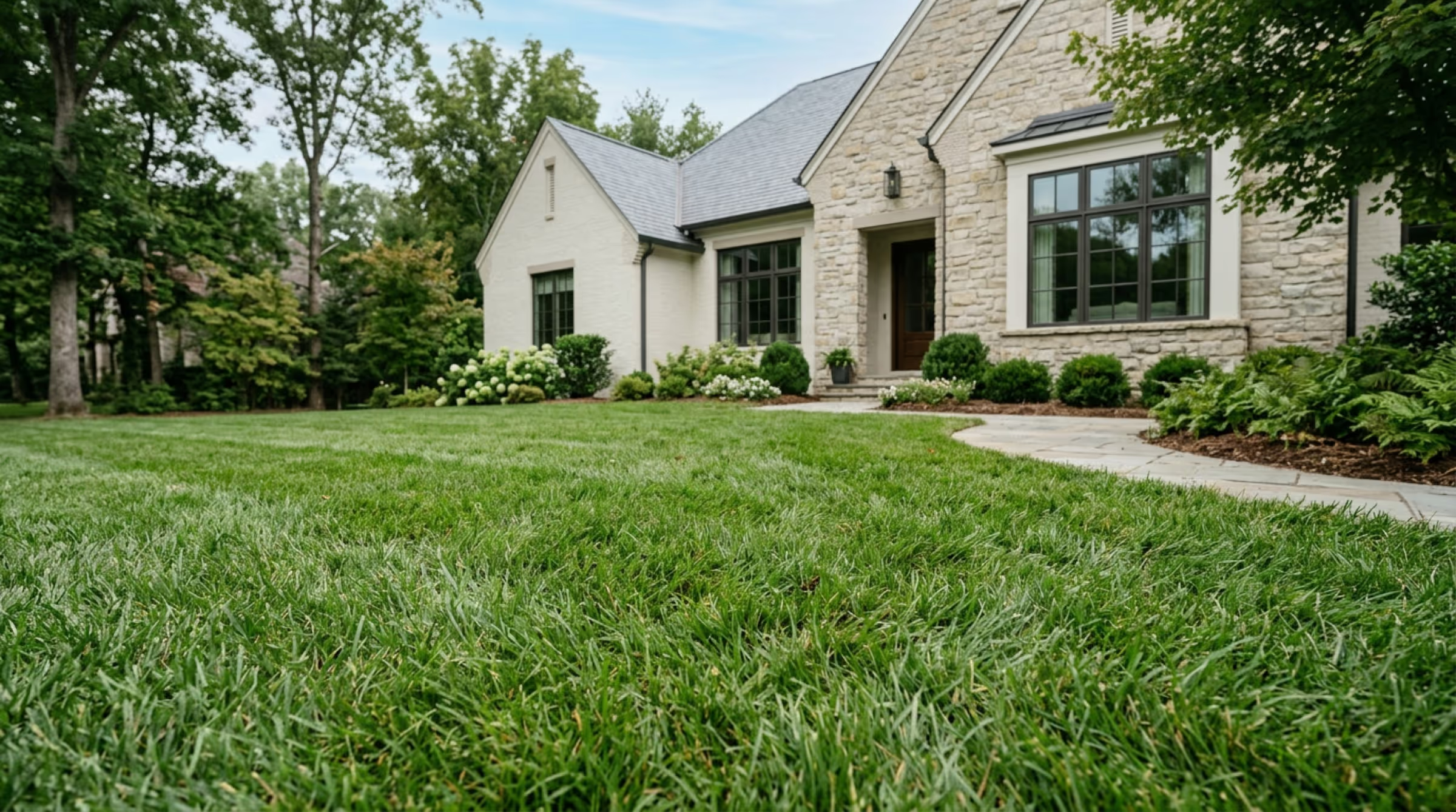
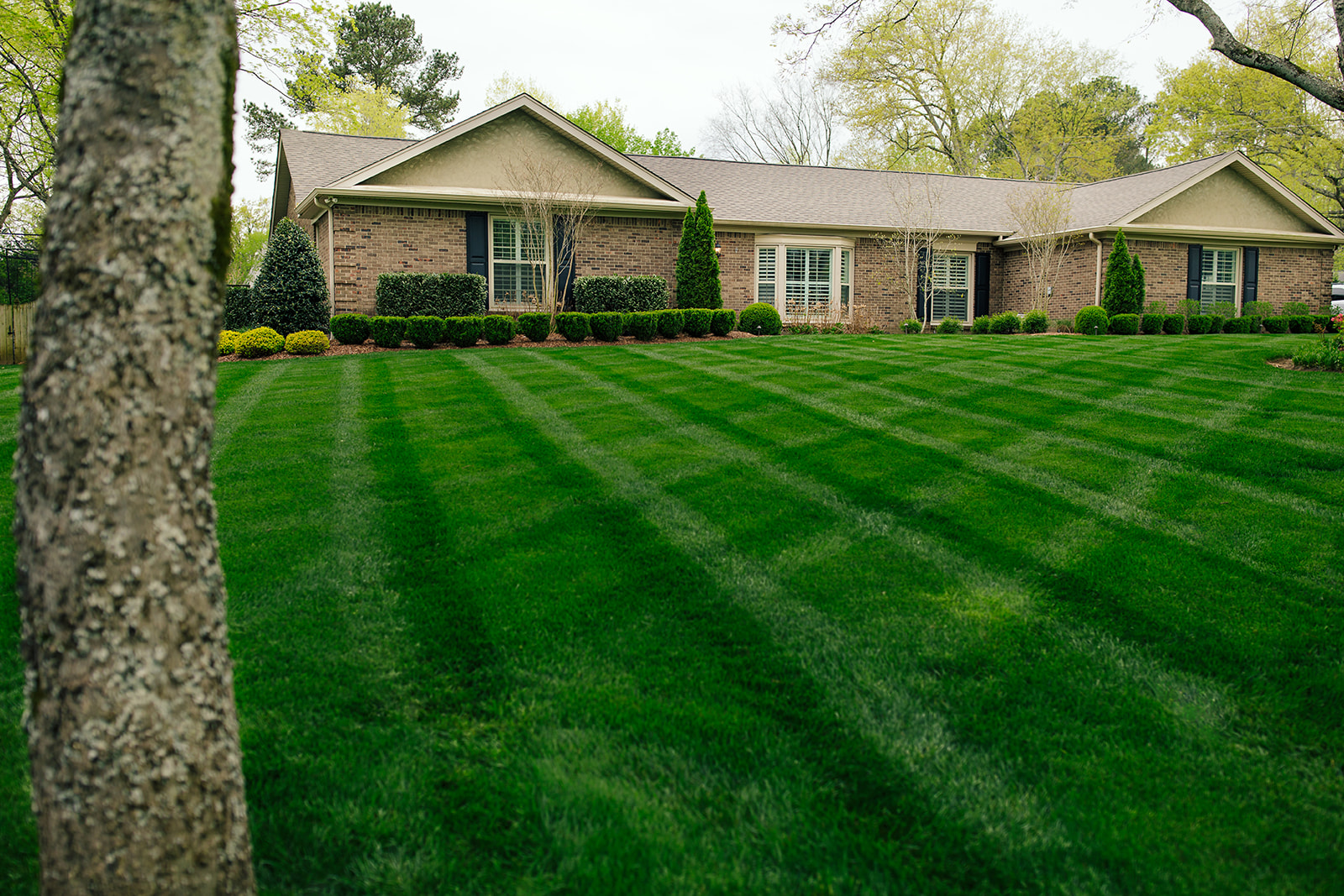
Ask around about aeration and you'll hear two camps. One swears by core aeration, the machine that pulls plugs out of the lawn. The other says liquid aeration does the job without the mess. For most Middle Tennessee lawns, the honest answer is that they do different jobs, and the best results come from using both. Here's how each one works and when each makes sense.
The Problem Both Are Solving
Much of Middle Tennessee sits on heavy clay. A season of mowing, foot traffic, kids, dogs, and summer heat packs that clay down tight. Compacted soil chokes off the air, water, and nutrients your grass roots need. Water runs off instead of soaking in, roots stay shallow, and the lawn thins out. Aeration is how you open the soil back up.
Core Aeration: The Proven Method
A core aerator pulls thousands of small plugs of soil out of the lawn, each a couple of inches deep. Those holes do three things right away: they relieve compaction at the surface, they let water and air reach the root zone, and they give grass seed a place to land with real soil contact.
That last part is why core aeration and overseeding go together. Seed dropped into open aeration holes germinates far better than seed scattered on top of a hard lawn.
What to expect: the plugs stay on the lawn and break down on their own over a week or two of mowing and rain. They look a little messy for a few days, and that's normal. (Here's what to do after aeration.)
Where core aeration shines
- Heavy clay and serious compaction
- Lawns with built-up thatch
- Any lawn being overseeded
Liquid Aeration: Reaching What a Machine Can't
Liquid aeration is a soil treatment sprayed over the lawn. It soaks in and helps loosen compacted clay from the inside out, improving how well water moves into and through the soil. There are no plugs and no holes.
Its biggest advantage is coverage. A machine can't safely run on steep slopes, tight side yards, or areas with shallow irrigation lines and buried utilities. Liquid treatment reaches every square foot.
Where liquid aeration shines
- Steep or hard-to-reach areas
- Lawns with shallow irrigation lines
- Homeowners who want no plugs on the lawn
Its limit
Liquid aeration doesn't open holes, so it doesn't give new seed that soil contact. On its own, it isn't a substitute for core aeration when the goal is to thicken a thin lawn.
Why Not Both?
This is where the debate misses the point. The two methods aren't competing; they're complementary. The cores open the surface and make room for seed. The liquid works the soil in between the holes and reaches the spots a machine can't. That's exactly why our Signature Aeration & Seeding does both in a single fall visit, then drops a Middle Tennessee cultivar mix straight into the open holes, with a preventive fungicide to protect the new seedlings.
So Which Does Your Lawn Need?
- Thin lawn, heavy clay, or thatch: core aeration with overseeding, at minimum.
- Slopes, irrigation, or no plugs wanted: liquid aeration.
- You want the biggest improvement next spring: both, in one visit.
Timing Matters as Much as Method
For the fescue lawns most of us have, fall is aeration season. September and October bring warm soil and cooler air, the combination new seed needs to establish before winter. If this year's window is closing on you, next September is the one to plan for. For the month-by-month detail, see the best time to aerate in Tennessee.
Not sure which method fits your yard? We'll take a look and recommend the right one: core, liquid, or the full Signature reset. Get your free estimate. No contracts, no surprises.
Related guides: What lawn aeration is · Aeration & overseeding in Tennessee · Fall aeration FAQ · What aeration costs in Nashville
Related posts
Take your lawn to the next level.