






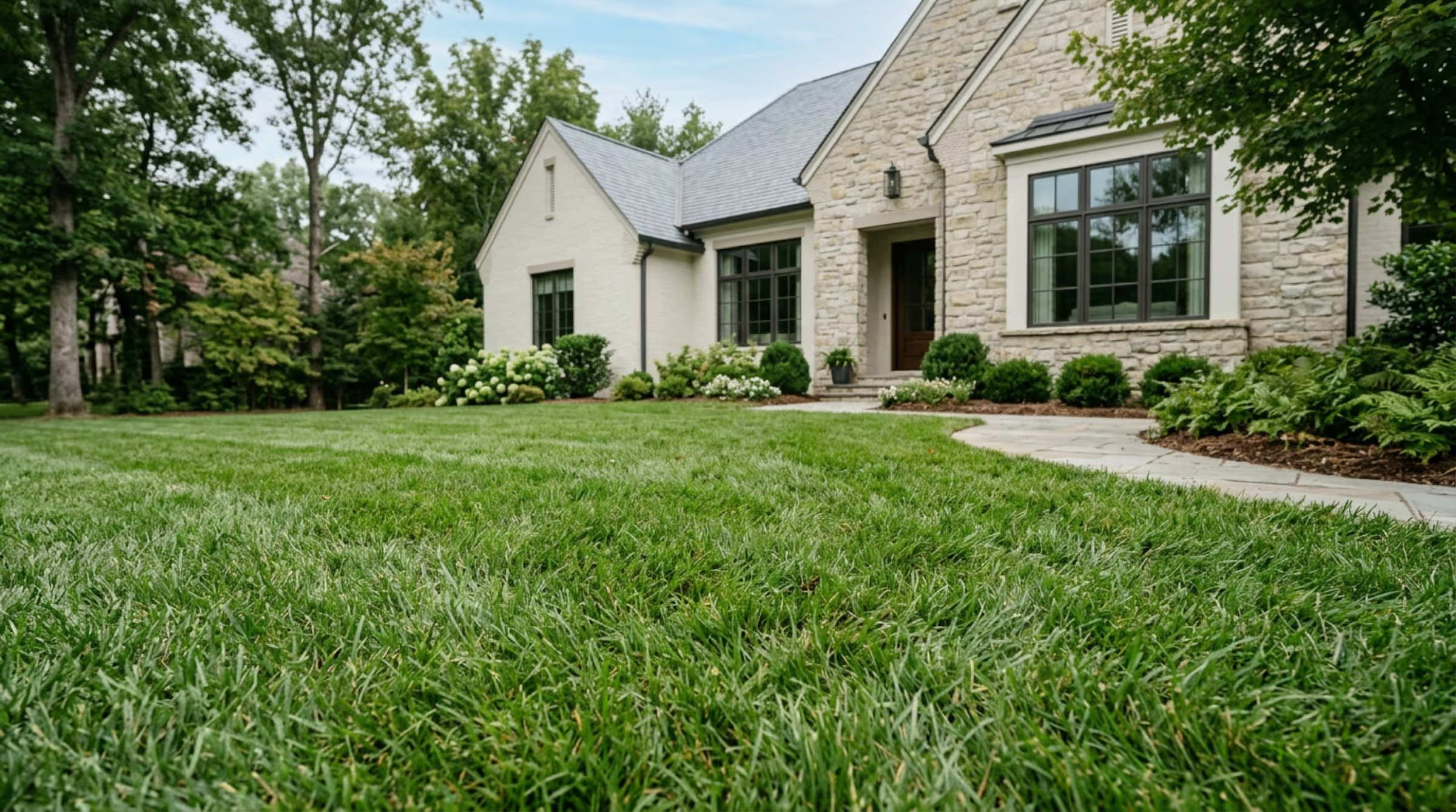
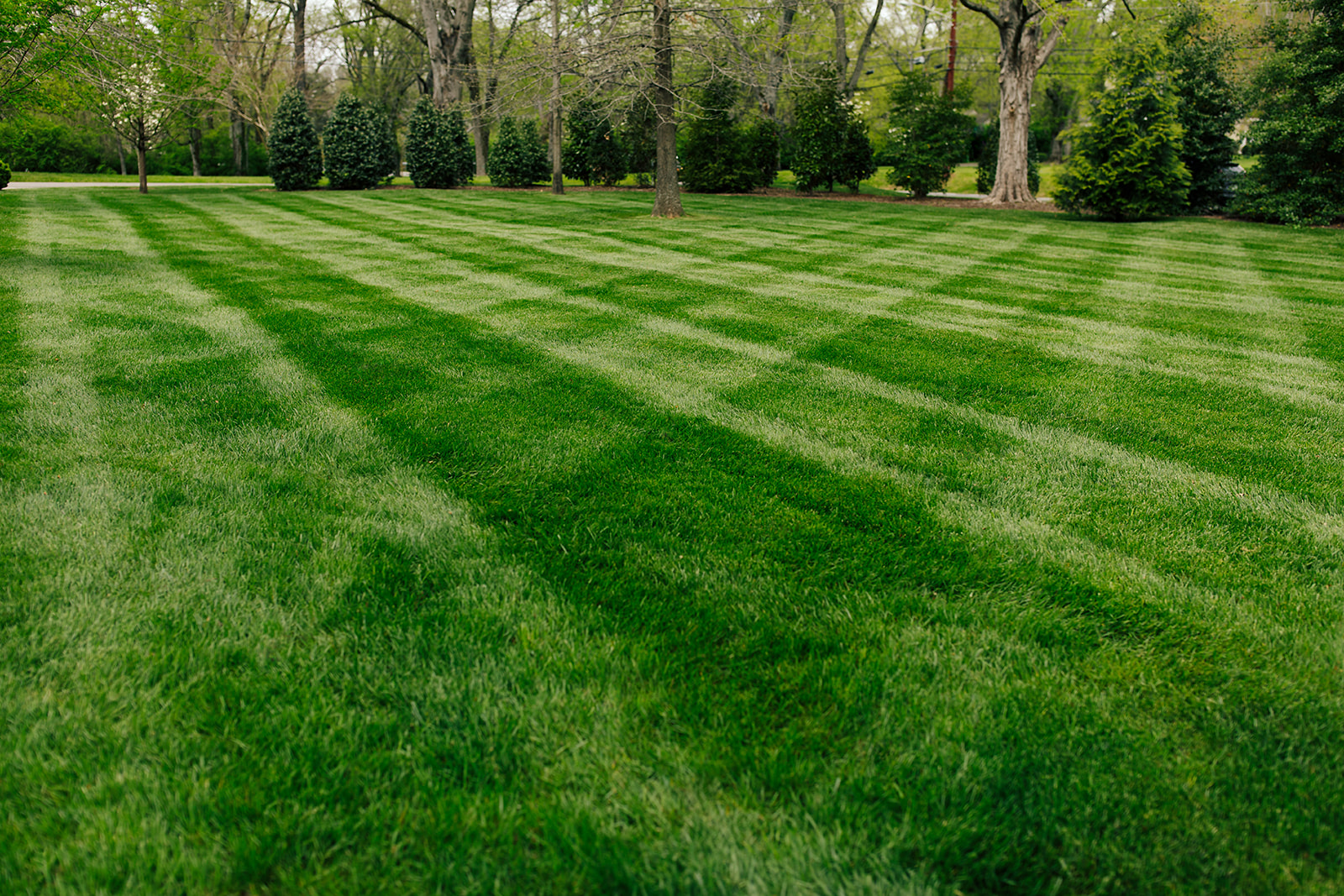
If crabgrass took over your lawn this summer, here's the good news and the bad news. The good news: every one of those plants dies at the first hard frost. The bad news: before it goes, each one drops thousands of seeds into your soil, and they'll all be waiting for spring. Crabgrass isn't really a summer problem. It's a February problem, and that's where winning it starts.
Why Crabgrass Is So Stubborn in Middle Tennessee
Crabgrass is a summer annual. It sprouts in spring, spreads fast through the heat, seeds, and dies with frost. It doesn't come back from the roots; it comes back from seed, every single year. That's why pulling it or spraying it in July feels like bailing water: you're fighting this year's plants while next year's crop is already in the ground.
Middle Tennessee hands it every advantage. Our summers are long, hot, and humid, and our heavy clay soil compacts and stresses turf. Crabgrass loves heat, loves stress, and loves any patch of bare soil it can reach. A thin lawn in August is an open invitation.
The Window That Decides Your Year
Crabgrass seed germinates once soil temperatures hold in the mid-50s for several days. In Middle Tennessee that usually lands somewhere between early March and early April, and a warm stretch in February can pull it earlier. A pre-emergent barrier has to be in the soil before that happens. Once the seed sprouts, the barrier does nothing for the plants that already made it.
That's why timing beats product every time. The same application that works perfectly on March 1 can be close to worthless on April 15. It's also why we watch soil temperatures instead of the calendar: a warm spring can move the deadline up by weeks. (For the full breakdown of how the two kinds of weed control work, see pre-emergent vs post-emergent.)
One application usually isn't enough
A pre-emergent barrier wears down over a few months, and crabgrass keeps germinating into early summer. A single early application can run out right when the late flush starts. A follow-up application in late spring keeps the barrier in place through the rest of the germination season.
What If It's Already Up?
Young crabgrass, a few weeks old and only a few leaves in, can be knocked out with a post-emergent treatment. Mature crabgrass in the middle of July is a different animal: it's tough, it's often heat-stressed, and it doesn't absorb treatments well. At that point the realistic goal is to limit the damage, keep it from seeding as heavily, and set up a better spring.
The Lawn Itself Is Your Best Defense
Pre-emergent is the first line. A thick lawn is the one that lasts. Crabgrass needs sunlight on bare soil to get started, and dense turf doesn't give it any. A few habits make a real difference:
- Mow high. For fescue, 3.5 to 4 inches. Taller grass shades the soil and keeps crabgrass seed from warming up.
- Water deep, not often. Short daily watering keeps the surface damp, which is exactly what crabgrass seedlings want. Deep, less frequent watering favors your grass.
- Fill thin spots in the fall. Fall is when fescue lawns get thicker, through aeration and overseeding. Every bare patch you fill in October is one crabgrass can't claim in May.
A word on spring seeding
Pre-emergent can't tell crabgrass seed from grass seed. If you put down grass seed in spring, a pre-emergent barrier will stop that too. That's one more reason Middle Tennessee lawns get seeded in the fall and protected in the spring, not the other way around.
Your Crabgrass Calendar
- Now through winter: Let frost finish off this year's plants. Get thin areas seeded in the fall.
- February to early March: Pre-emergent down before soil temperatures climb.
- Late spring: Follow-up application to extend the barrier.
- Summer: Spot-treat any young escapes early, mow high, water deep.
Pre-emergent timed to soil temperature is built into every one of our year-round lawn programs, so the window gets hit without you having to watch the thermometer. If crabgrass won this year, next year starts now. Get your free estimate. No contracts, no surprises.
Related guides: Lawn weed control in Middle Tennessee · The weeds taking over Middle Tennessee lawns · Pre-emergent vs post-emergent
Related posts
Take your lawn to the next level.

What the Best-Looking Lawns Are Doing Differently (And How You Can Too)