.avif)
.png)
.jpg)
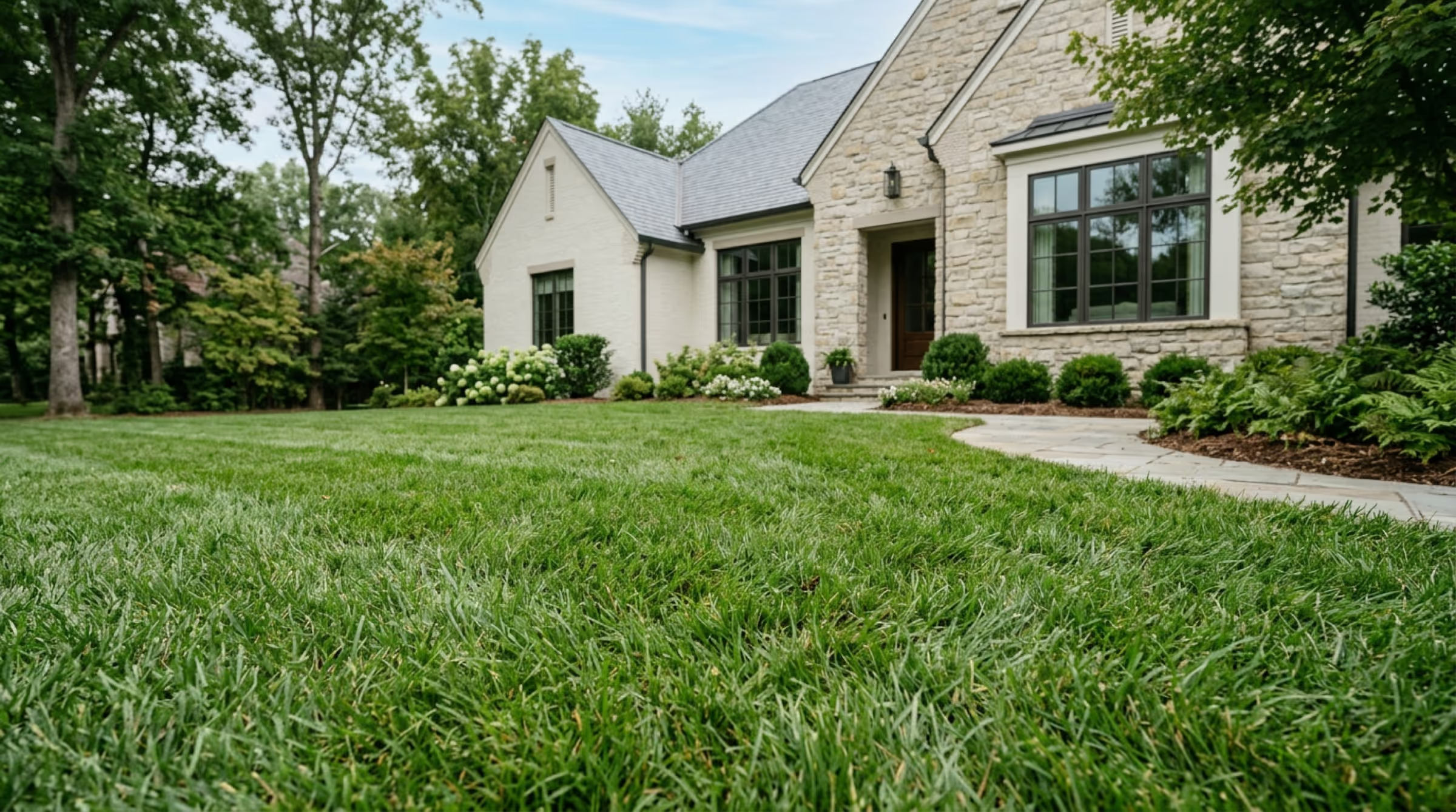
Every question a homeowner could ask.
Pricing, scheduling, weeds, feeding, disease, mosquito, watering, mowing, safety, guarantees, and switching providers, answered straight, with no script and no fine print. If it's not here, call us and a real person will answer.
%20(1).avif)
The questions worth asking before anyone
touches your lawn.
We collected the questions Middle-Tennessee homeowners actually ask us (about cost, chemicals, kids and pets, results, and what happens if they're not happy) and answered every one clearly. Pick a topic, or just start reading.
Getting started
Before anything goes on your lawn, here's how the first conversation works.
Give us your property address through the form or call 615.785.1849. We measure the turf areas and check turf type, then send a written quote, usually within a couple hours during business hours. No one needs to be home.
No. We size and price most properties remotely using satellite measurement. In some unique situations, like larger estates or unusual layouts, we may need a site visit, but that's not typical. All we need to get started is your address.
Yes. The estimate is free and there's no contract attached to it. You see the price and the schedule before you commit to anything, and you can say no with zero pressure or cancellation fees.
We know you're ready to get started, so your lawn will be on a route within just a few days of signing off on your plan.
No. Pure Turf programs continue indefinitely with no annual agreement and no early-termination penalty. You stay because the lawn looks better, not because a contract locks you in.
That's the most common call we get. Start with the free estimate. On the first visit, our team runs a soil test and walks you through what's going on with your lawn and what to expect going forward. You don't need to diagnose anything yourself; that's our job.
Pricing & billing
What it costs, how you pay, and what's included in the number.
Mainly by measured turf square footage and the program tier you choose. Aeration and overseeding, along with optional services like mosquito control, are also priced by square footage but billed separately from the program. Pricing is per application, not a vague monthly lump, so you can see exactly what each application costs.
We offer Basic, Essential, and Elite for lawn care. Basic covers the core fertilization and weed-control calendar. Essential adds disease and insect protection. Elite layers in custom granular fertilizations and the most attentive schedule. For fall aeration and overseeding, we offer Liquid, Mechanical, and Signature tiers. We'll recommend the right lawn care and AOS combination based on your turf and goals; you decide.
You're billed per application as the work is done, not asked to prepay the whole year. We keep a card on file and charge it after each application. If you'd rather pay upfront, we offer a prepay discount at the start of each calendar year.
No fuel surcharges, no trip fees, no surprise line items. The quote is the price. If a property genuinely needs something beyond the program (say a heavy lime correction after the soil test), we tell you first and you approve it before we do it.
We offer a prepay discount at the start of each calendar year. Ask when you get your quote and we'll walk you through the details.
We accept major credit cards and ACH/bank draft. A card or account is kept on file and charged automatically after each application, so you don't have to think about it.
Pricing can adjust year to year with material and labor costs, but we don't do mid-season surprise increases, and any annual adjustment is communicated before it takes effect, never buried in an invoice.
Programs & services
Everything Pure Turf does, and how the pieces fit together.
Lawn care programs (Basic, Essential, and Elite tiers covering fertilization, weed control, and disease/insect protection), fall aeration and overseeding (Liquid, Mechanical, and Signature tiers), and a pest control program for fleas, ticks, and mosquitoes.
No. Pure Turf is a turf-health company, not a mowing service. We feed, treat, and care for the grass; you keep your own mowing crew or do it yourself. The mowing-height and frequency notes we leave on each report make our applications work better, but the cut is yours to arrange.
Yes. HOAs, office parks, and commercial campuses run on dedicated commercial plans with the documentation and scheduling those properties need. The same agronomy applies, the logistics just scale up.
Scheduling & visits
When we show up, how often, and what you'll know about it.
Most lawn programs run 8 to 10 visits a year, spaced roughly four to six weeks apart and weighted more heavily through summer when heat and stress hit the lawn hardest. Flea, tick, and mosquito control runs monthly from March through October.
No. As long as the technician can access the lawn, you don't need to be there. We treat the property, log everything, and send the report; you can be at work the whole time.
Yes. We send an email 24 hours before your scheduled service. If you'd like, we can also text or call you when we're on the way, just let us know.
Let us know the gate code or your preferred access arrangement when you sign up and we'll note it on the account. If we can't get in, we'll reach out to reschedule rather than skip the visit.
Just reach out and let us know. Our treatments work as a complete system, so skipping applications leaves gaps in your protection and isn't something we recommend. That said, you're in charge, and we'll honor your request. Keep in mind that skipping a treatment makes you ineligible for free service calls for the rest of the year.
Weeds & feeding
The core of lawn health: stopping weeds before they start and feeding turf the right way.
We like the first round down by mid-March. We do a split application, with a second round following, since that's what gives the best crabgrass control through the season. Once crabgrass germinates, pre-emergent can't undo it for that year, so timing matters.
Very few lawns are ever 100% weed-free. Weeds break through from time to time, that's why we come every 4 to 6 weeks, to knock them back and keep your lawn clean. If you've been on the program for at least 6 months and you're seeing more than just a few, call us, that's not normal and we'll fix it.
Yes, though they're not all equally easy. Clover usually clears up fast with standard treatment. Nutsedge and wild violet are tougher and need targeted products, sometimes over more than one season. Send us a picture so we can properly identify what you're seeing, and we'll put the right treatment on it.
Just the weeds. We use selective herbicides that target broadleaf and grassy weeds without harming your turf when applied correctly by a licensed technician. That precision is exactly why it's worth having a pro do it.
Completely different calendar. Warm-season turf gets heavier nitrogen in summer, skips the fall feed cool-season grass needs, and has its own weed timing. We tag your turf type on day one so you get the right schedule, not the default fescue one.
Aeration & seeding
How thin, compacted, or tired lawns get rebuilt from the soil up.
Core aeration pulls thousands of small soil plugs out of the lawn, relieving compaction so air, water, and nutrients can actually reach the roots. Middle Tennessee clay compacts hard, so without aeration even a well-fed lawn stays thin. It's one of the best things you can do for your lawn's health.
Fall, targeting September and October for cool-season grasses like fescue. Depending on the weather, our window can run anywhere from late August through early November. The soil is still warm enough to germinate seed but cool enough for new grass to establish before winter, which is why fall is strongly preferred over spring.
A custom fescue blend we hand-select for Middle Tennessee, chosen for disease resistance, color, and how well it holds up through our summers, not a bargain big-box mix.
Germination usually starts in one to three weeks depending on temperature and watering, with a fuller fill-in over the following month or two. The single biggest variable is whether you keep the seed consistently moist in the first few weeks.
Yes. This is the one time watering really matters. New seed needs light, frequent watering to stay moist (often daily or twice daily for short periods) until it germinates and establishes. We leave specific instructions on the report after the service.
Disease & fungus
Brown patches and thinning spots in summer are usually fungal, and preventable.
Two different things can cause this, so it helps to know which one you're dealing with. Fungal disease (brown patch or dollar spot) thrives in Middle Tennessee heat and humidity, especially on fescue, and it looks like drought stress even though watering more actually makes it worse. Outside of irrigation, preventive fungicide is the single most important thing you can do for your lawn during the summer, it's what keeps disease from taking hold in the first place. If you're seeing brown patch or dollar spot, make sure you're on a program that includes it. Hot spots are different: thin soil or rock underneath dries out that section of lawn faster during hot, dry stretches. The fix there is irrigation, not fungicide. If you're not sure which one you're looking at, send us a picture and we'll help you figure it out.
The big regional ones: brown patch, dollar spot, and spring dead spot, plus others that can show up under pressure. We time applications around disease pressure and weather, not damage you can already see, catching it before it shows rather than after.
Both, but prevention wins. Fungicide applied before and during high-pressure conditions keeps disease from taking hold; once a lawn is badly scarred, fungicide stops the spread but the recovery takes time and good cultural practices. Getting ahead of it is far cheaper than recovering from it.
Three, timed to get you through peak disease season each summer. That's included in both Essential and Elite. If you're on our Signature aeration and overseeding program, you'll get a fourth application during seeding, since the daily watering needed to grow in new grass raises disease risk.
Good cultural practices help a lot: water deeply in the early morning, never in the evening, mow high with a sharp blade, and don't over-fertilize with quick-release nitrogen. But in a Tennessee summer, fescue under real disease pressure usually needs fungicide too. Culture reduces the need; it rarely eliminates it.
Mosquito & pests
Getting your yard back in the evenings, safely.
We treat the shaded, humid harborage areas where mosquitoes rest during the day (under shrubs, along tree lines, in dense plantings) on a recurring cycle. Knocking down the resting adults and treating breeding spots dramatically cuts the population in your yard.
Each treatment holds for about a month, which is why the program runs on a monthly cadence from March through October. Staying consistent through the season is what keeps the mosquito population suppressed.
Yes, once it's dry. The products are EPA-registered and applied by licensed technicians. We ask that people and pets stay off the treated areas until they dry, usually about 30 minutes, after which the yard is safe for normal use.
We target mosquito harborage areas, like shrubs, mulch beds, and shaded resting spots, not flowering plants where bees and pollinators feed. We avoid treating blooms directly, and careful timing and placement keep impact on bees and other beneficial insects to a minimum.
Yes. We offer a mosquito-only program, or a combined flea, tick, and mosquito program if you want broader coverage. Let us know what you're dealing with and we'll get you on the right one.
Watering & mowing
The part that's on you, and the habits that make our work pay off.
Deeply and infrequently: about one inch of water per week total, split into 1-3 long sessions rather than daily sprinkles, and always in the early morning. Deep watering drives roots down, while light evening watering keeps the lawn wet overnight and invites disease.
For fescue, keep it tall, around 3.5 to 4 inches, especially in summer. Tall grass shades the soil, holds moisture, and crowds out weeds. Scalping the lawn short is one of the fastest ways to invite crabgrass and disease. Warm-season grasses are cut lower.
Significantly. Mowing too low stresses the turf, exposes soil for weed seeds to germinate, and weakens the lawn's ability to fight disease. A sharp blade and the right height do more for weed control than people realize; it's why we note it on every report.
Generally leave them (mulch them). Clippings return nitrogen and organic matter to the soil and don't cause thatch when you mow regularly. The exception is when the lawn is actively diseased or you've let it get long; then bagging helps avoid spreading problems.
Wait until the application has dried and, for granular products, ideally until after it's been watered in; give it 24 to 48 hours. Mowing too soon can remove or redistribute product before it does its job. The report will note anything specific to that visit.
Since we recommend only running irrigation in the early morning, water your lawn at the next morning's cycle. Rain is good news, even light rain during the application itself is fine. The only exception is a hard, heavy rain immediately after we treat, which can wash the product away before it has a chance to work. If that happens, we'll redo the application at no charge.
Pets, kids & safety
What's being applied, and how to stay safe around it.
Yes. Every product is EPA-registered and applied by technicians licensed through the Tennessee Department of Agriculture, used exactly as directed. Standard guidance is to keep kids and pets off the treated area until it's dry, about 30 minutes, after which normal use is fine.
Until it dries, roughly 30 minutes for most applications. For granular products that get watered in, there's no meaningful wait once it's down. The report notes any product-specific re-entry interval.
Yes. We offer a pesticide-free program. Let us know before we start and we'll talk through product choices, timing, and notification so you can plan around applications.
Yes. Applications are performed by technicians licensed through the Tennessee Department of Agriculture, and the company carries liability insurance. The same-day report documents exactly what licensed-applicator work was done on your property.
Results & guarantee
What to expect, how long it takes, and what happens if it doesn't work.
You'll often see early improvement, better color, fewer weeds, within the first few weeks. But how quickly it transforms depends on where your lawn is starting from. If you've got decent grass coverage that's just weedy, cleanup happens fairly fast. If the lawn is thin, the biggest jump comes after your first aeration and overseeding. Either way, turf is biology, not paint. The first year fixes the soil and the obvious problems, and the lawn keeps compounding from there.
Call us. Communication is key, we'd rather hear from you than have you quietly unhappy. We stand behind everything we do, and if there's a fix to be made, we'll make it. Sometimes the issue is timing, not results, since turf takes time to respond and may just need another cycle or two. Either way, we'll shoot you straight on what to expect and how long it'll take to get there.
No honest company guarantees a perfect, zero-weed lawn; weather and biology don't cooperate that cleanly. What we stand behind is the program working: dramatically fewer weeds, healthier turf, and free return visits to spot-treat what slips through between applications.
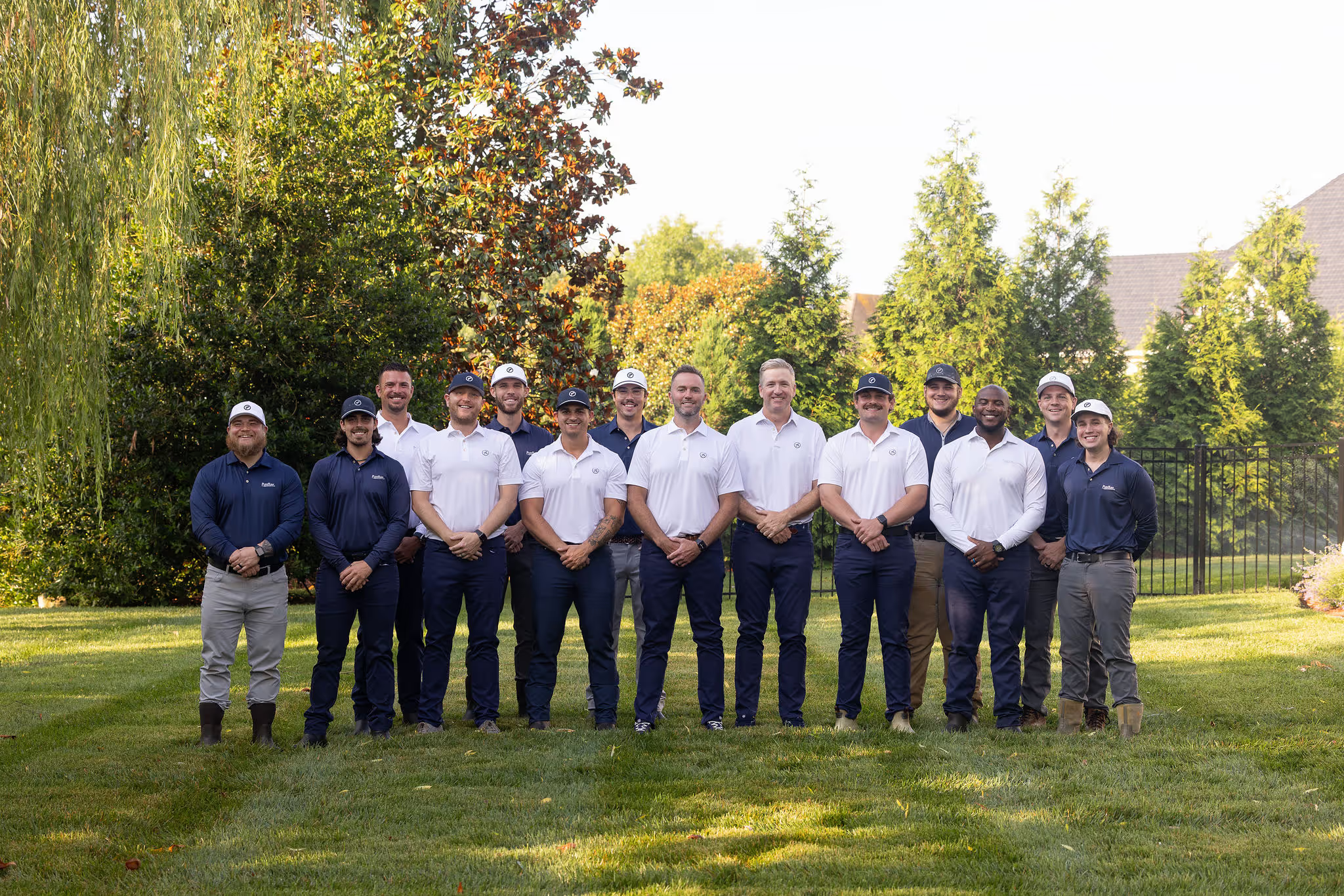
Our team has over 100 years of combined experience growing grass right here in Middle Tennessee, so we know this soil, this heat, and the diseases that come with it, not a national route calendar built for somewhere else. There's no contract holding you in place, the lawn keeps you, not paperwork. Go read our reviews, we stand behind everything we do. And we stay hungry and humble, always working to get better.
Year one is about correction: fixing soil pH, knocking back established weeds, getting the feeding and disease timing right, and filling thin areas with fall seed. Year two is where a well-maintained lawn really shows: denser turf, fewer weeds breaking through, and far less recovery work because the problems were solved, not just patched.
Switching & cancelling
Coming from another company, or thinking about leaving; both are easy.
Yes. We'll review what's already been applied this year, catch up anything that was missed (a skipped pre-emergent, an overdue feeding) and pick up the calendar from where you are. You don't have to wait until next spring to switch.
Not if it's handled right. On day one we assess what's been done and build a bridge schedule so nothing critical gets double-applied or missed. Most mid-season switches finish the year in better shape than they started.
No. Because there's no annual contract, you're never on the hook for visits that haven't happened. You pay for the applications that were done, and that's it.
Middle Tennessee: Davidson, Williamson, Rutherford, Sumner, Maury, and Robertson counties, including Nashville, Franklin, Brentwood, Murfreesboro, Hendersonville, Mt. Juliet, and the surrounding communities. If you're not sure your address is in range, just ask.
Call 615.785.1849 or email [email protected]. You can also reply directly to any visit email. Either way, you're reaching someone local who knows your account, not a scripted call center.
“The same-day report after every visit is the thing I tell everyone about. I always know exactly what went on my lawn and why.”
Homeowner / Franklin, TN
“Switched mid-summer from a national chain. They caught up the stuff that had been skipped and the lawn was noticeably better by fall.”
Homeowner / Murfreesboro, TN
“No contract was the reason I tried them, and the results are the reason I stayed. Three years now.”
Homeowner / Mt. Juliet, TN
Where we work,eight counties.

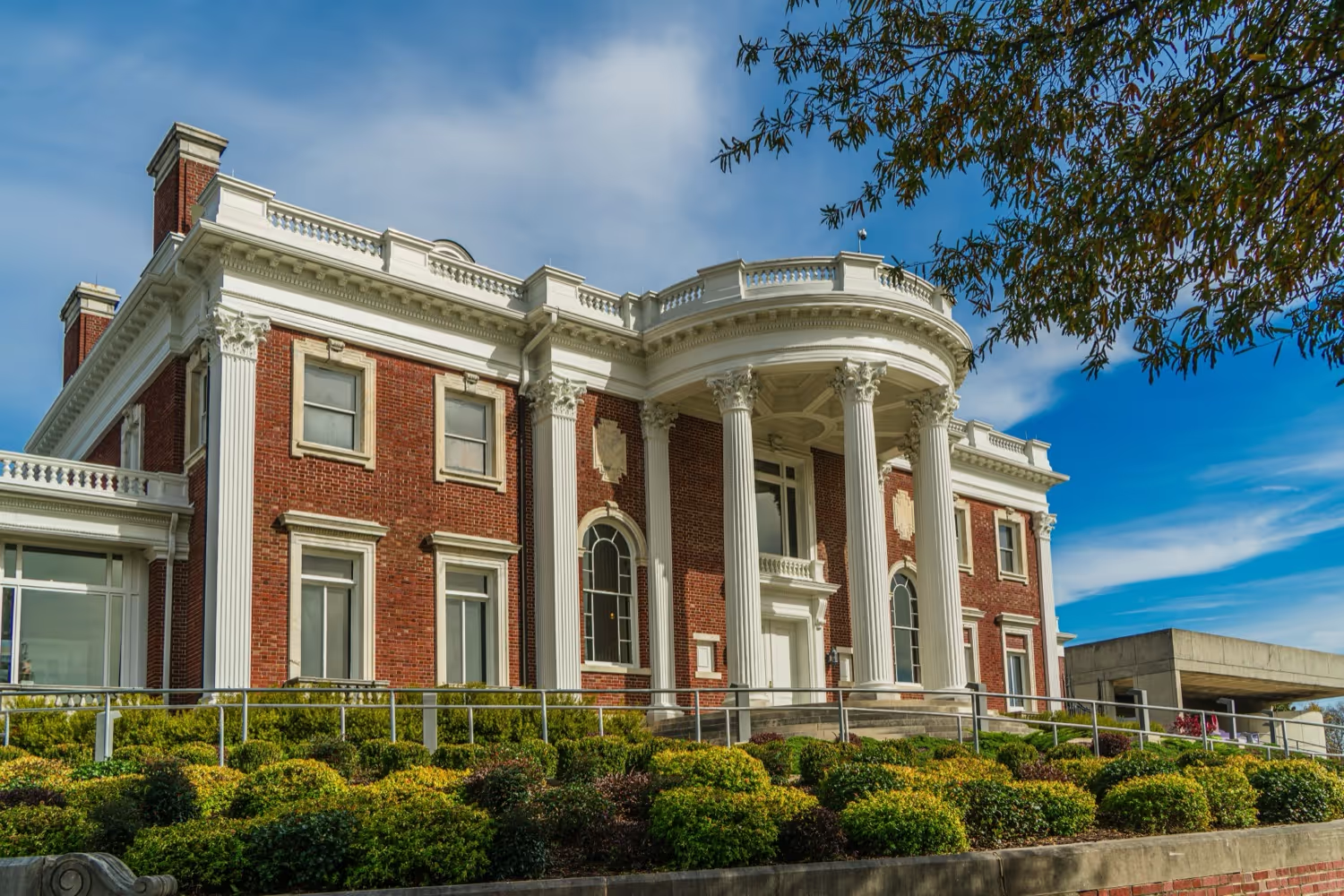
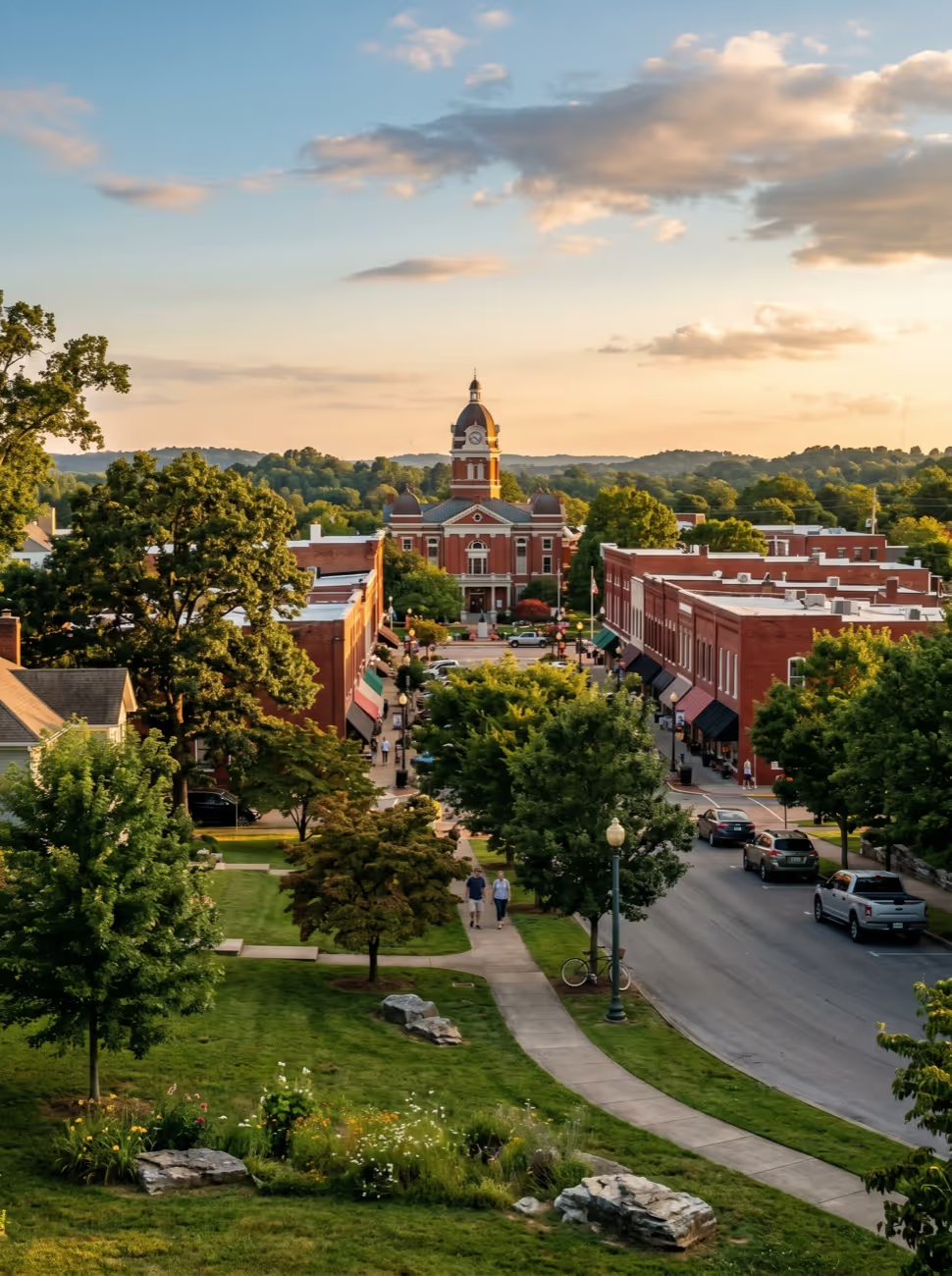
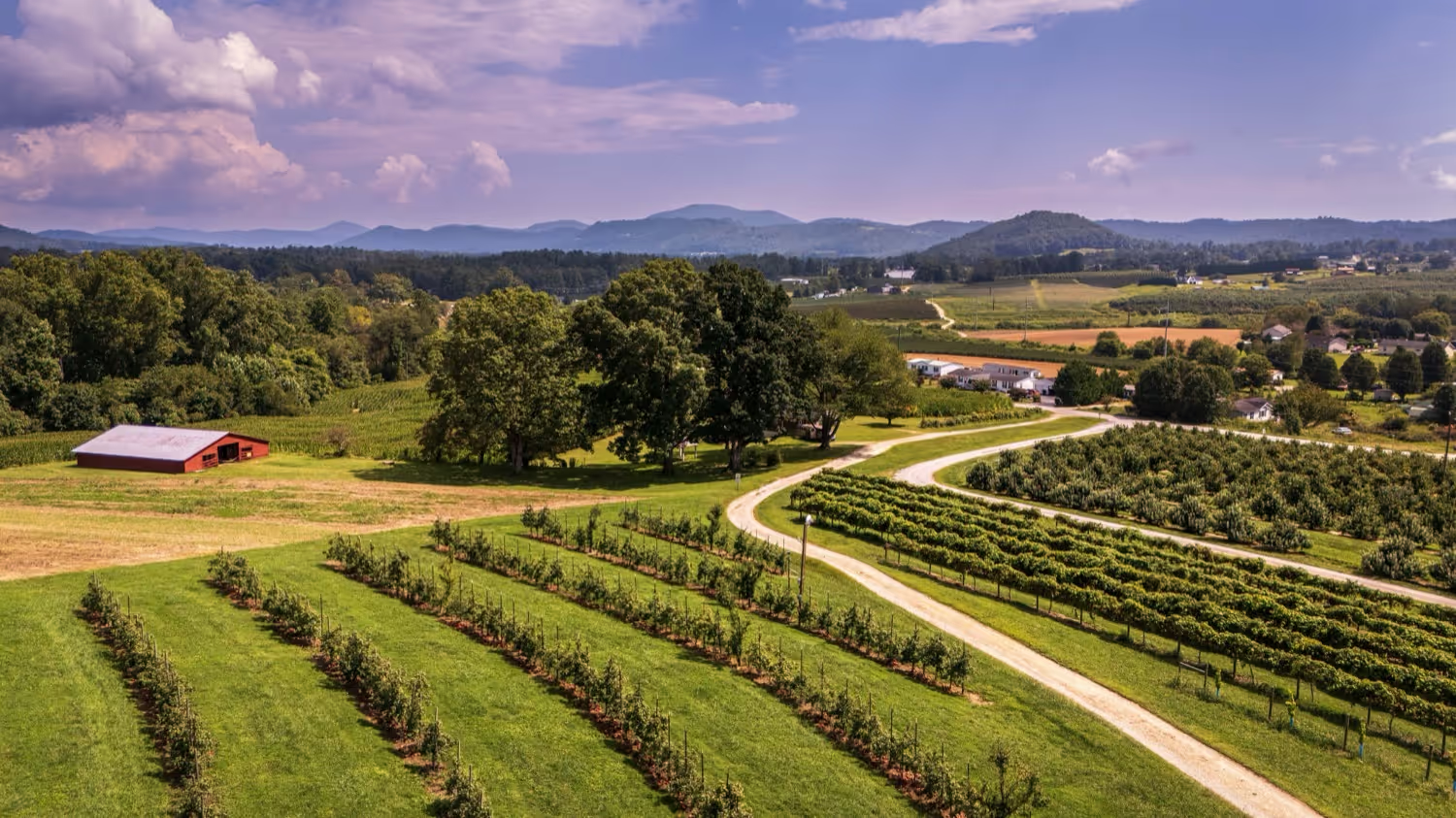
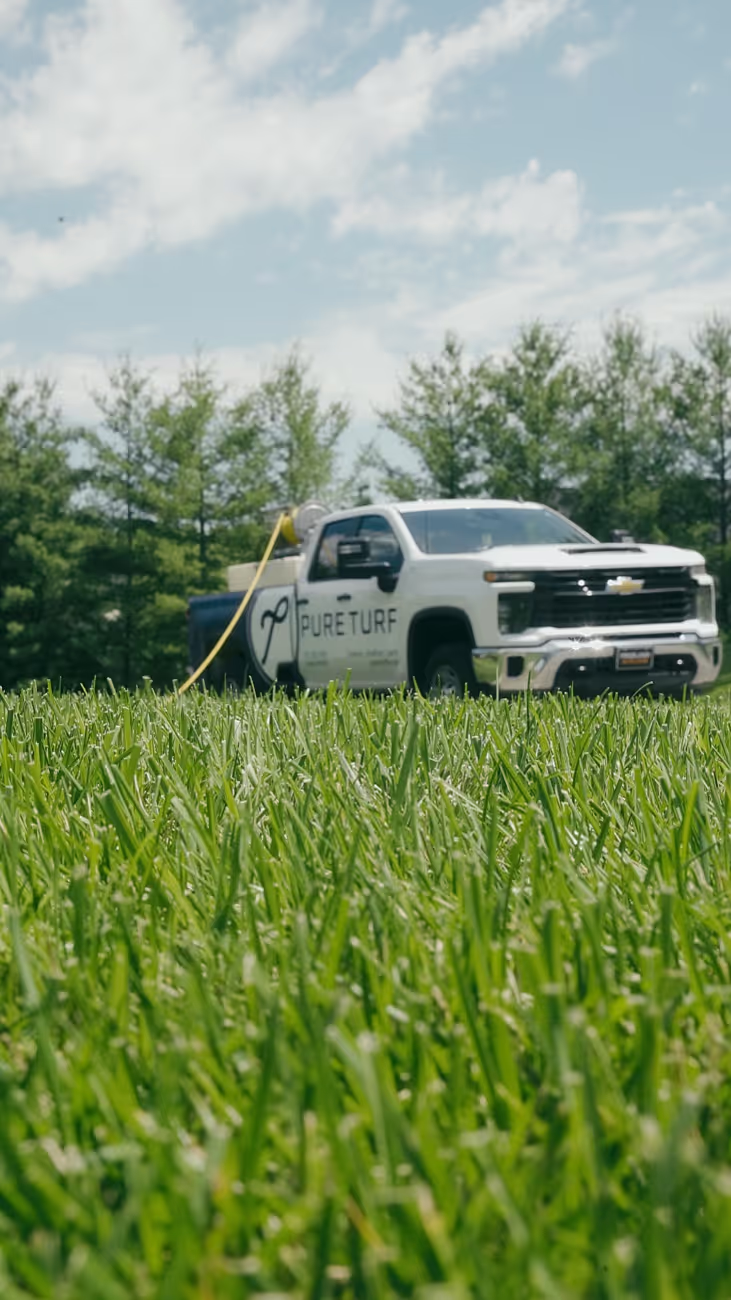
Tell us where the property is and what's bothering you about the lawn. We'll soil-test on day one, build the plan around your answers, and put it all in writing, no contract required.
Care for your property
like it deserves.
Tell us about the property and we'll send a clear, honest estimate, usually within one business day.
.svg)