



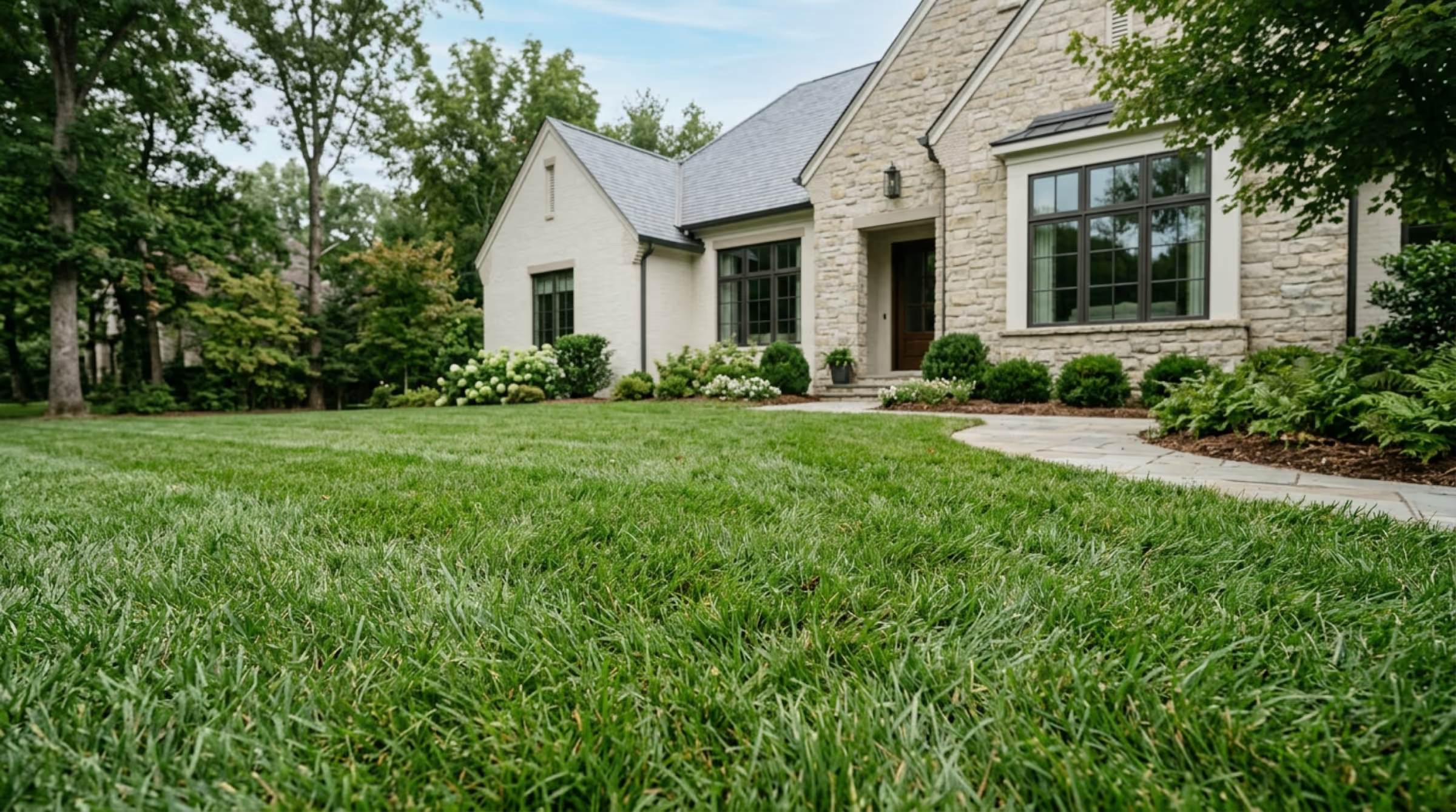
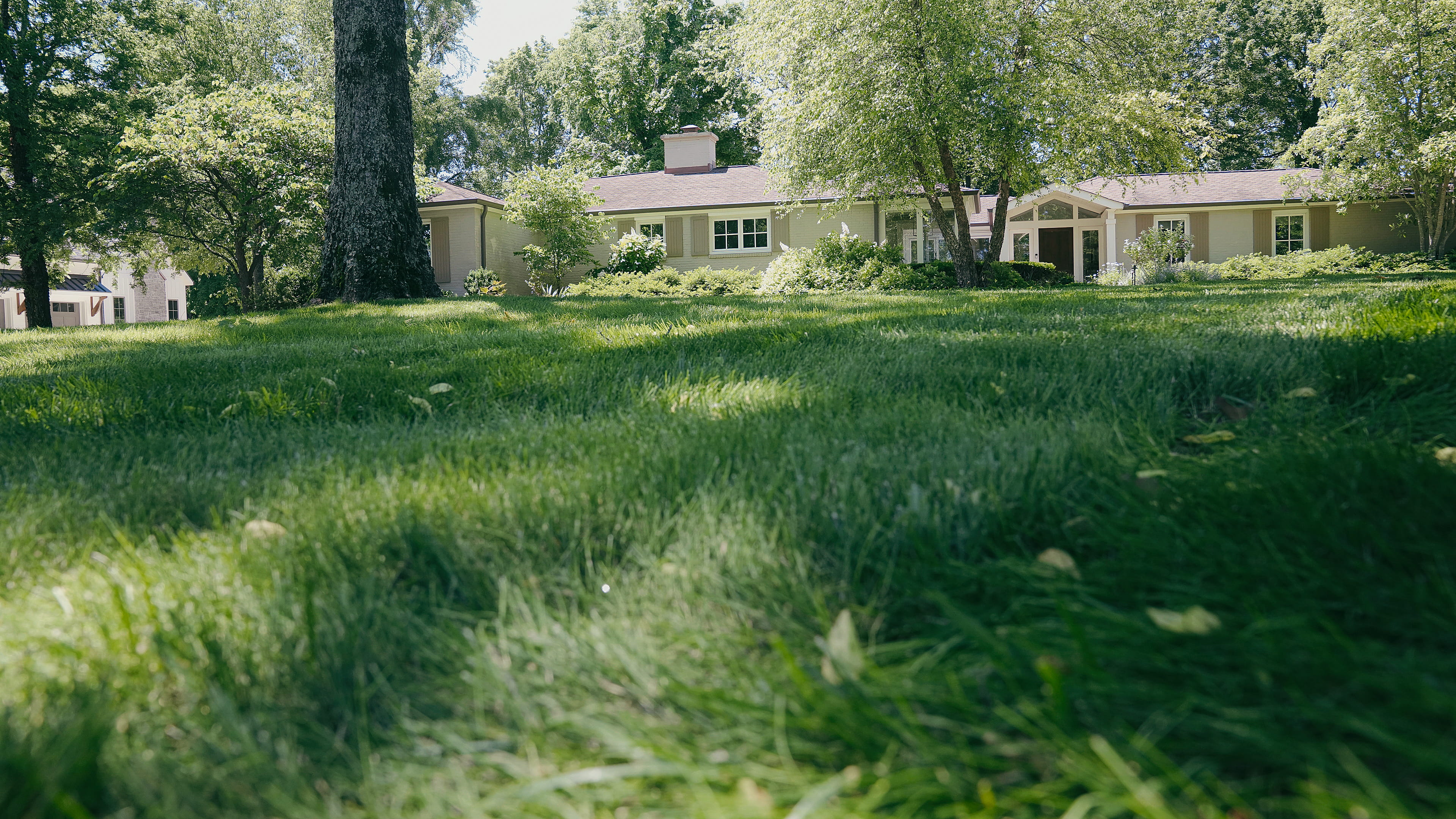
Stand at the curb and take an honest look at your lawn. Is it a fescue lawn that has gotten thin, with a few bare patches and some weeds moving in? Or is it mostly weeds, wiry grass, and dirt, with a little turf hiding in between? That one question decides whether you need a fall overseed or a full lawn renovation, and getting it right can save you a season of frustration.
The Rule of Thumb
Here's the simple version: if more than roughly half of the lawn is weeds, bare soil, or the wrong kind of grass, a renovation is worth considering. If most of the lawn is still decent grass that has simply thinned out, overseeding will get you there with far less disruption.
A few questions help you sort out which side of the line you're on:
- What is actually growing? Thin fescue is very fixable. A fescue lawn overrun by Bermuda creeping in from the neighbor's yard, or by tough perennial grassy weeds, is a different problem that seed alone won't solve.
- Is the ground itself the problem? Low spots that hold water, a badly uneven yard, or a new-construction lot with subsoil on top all point toward renovation.
- Has overseeding already let you down? If you've aerated and overseeded properly for a couple of falls and the lawn keeps sliding back, something deeper is going on: shade, drainage, disease, or soil chemistry.
What a Full Renovation Involves
A renovation is a fresh start. Done right, it usually looks like this:
- Kill off the existing weeds and unwanted grass, sometimes over more than one round, and give it time to die back completely.
- Test the soil and correct the pH and nutrients before anything new goes down.
- Fix grade problems: fill low spots, smooth out ruts, and make sure water drains away from the house.
- Prepare a seedbed, either by working the soil or by slit-seeding into the dead turf so the seed lands in real soil.
- Seed (or lay sod), then water lightly and often until the new grass is established.
It's a real project, measured in weeks of prep and a full season of babying young grass. It's the right call for some yards. To be clear, it's also bigger than what we do: Pure Turf doesn't do full renovations, grading, or sod. Our work starts where the existing lawn is still worth building on, which, honestly, is most of the lawns we see.
Why Fall Is the Window for Fescue
Whether you renovate or overseed, a tall fescue lawn in Middle Tennessee should be seeded in the fall, roughly September to October. That window lines up everything new seed needs:
- Warm soil left over from summer gets seed up and growing fast.
- Cooler air is easier on tender seedlings than spring's quick slide into summer.
- Less weed pressure, since the summer annuals are on their way out.
- Two growing seasons, fall and the following spring, for roots to develop before July heat arrives.
Spring seeding works against you here. Seedlings that sprout in April have shallow roots when our hot, humid summer hits, and many don't make it. Spring pre-emergent also stops grass seed just as well as it stops crabgrass. (More on that in spring vs fall overseeding.)
One exception: Bermuda and zoysia lawns are warm-season grasses on a completely different calendar, and they should not be overseeded with fescue. If you're not sure which grass you have, start with fescue vs Bermuda in Middle Tennessee.
Why Aeration and Overseeding Fixes Most Thin Lawns
Most rough-looking fescue lawns around Nashville aren't failing because the grass is wrong. They're failing because of what our summers and our heavy clay soil do to them. Compacted clay starves roots of air and water, summer heat and disease thin the turf, and every bare spot becomes a home for weeds.
Core aeration takes that on directly. It pulls small plugs of soil out of the lawn, which relieves compaction and gives new seed a pocket of loose soil to land in. Seed that drops into those holes gets the soil contact it needs, so far more of it actually germinates. Repeat that each fall and a thin lawn thickens year over year, without tearing anything out.
That's the thinking behind our Signature Aeration & Seeding: core aeration plus liquid aeration to work the clay between the holes, overseeding with a Middle Tennessee cultivar mix, and a preventive fungicide to protect the new seedlings, all in one fall visit.
Signs overseeding is probably enough
- You can still see grass across most of the yard, just not as much as you'd like.
- The thin areas are scattered, not the whole lawn.
- Weeds are present but haven't taken over.
- The yard drains reasonably well after a hard rain.
Making the Call
If your lawn is mostly grass that has lost its density, skip the renovation and put your energy into a good fall overseed, then follow it with solid care through spring. If it really is past the halfway point, a renovation may be the better long-term move, and we'll tell you so honestly. Not sure which you're looking at? We'll walk the lawn with you and give you a straight answer. Get your free estimate. No contracts, no surprises.
Related guides: Aeration & overseeding in Tennessee · The best grass seed for Middle Tennessee · How to fix bare spots in your lawn
Related posts
Take your lawn to the next level.

Should I aerate and overseed in the spring or fall?