


.avif)

.png)
.jpg)





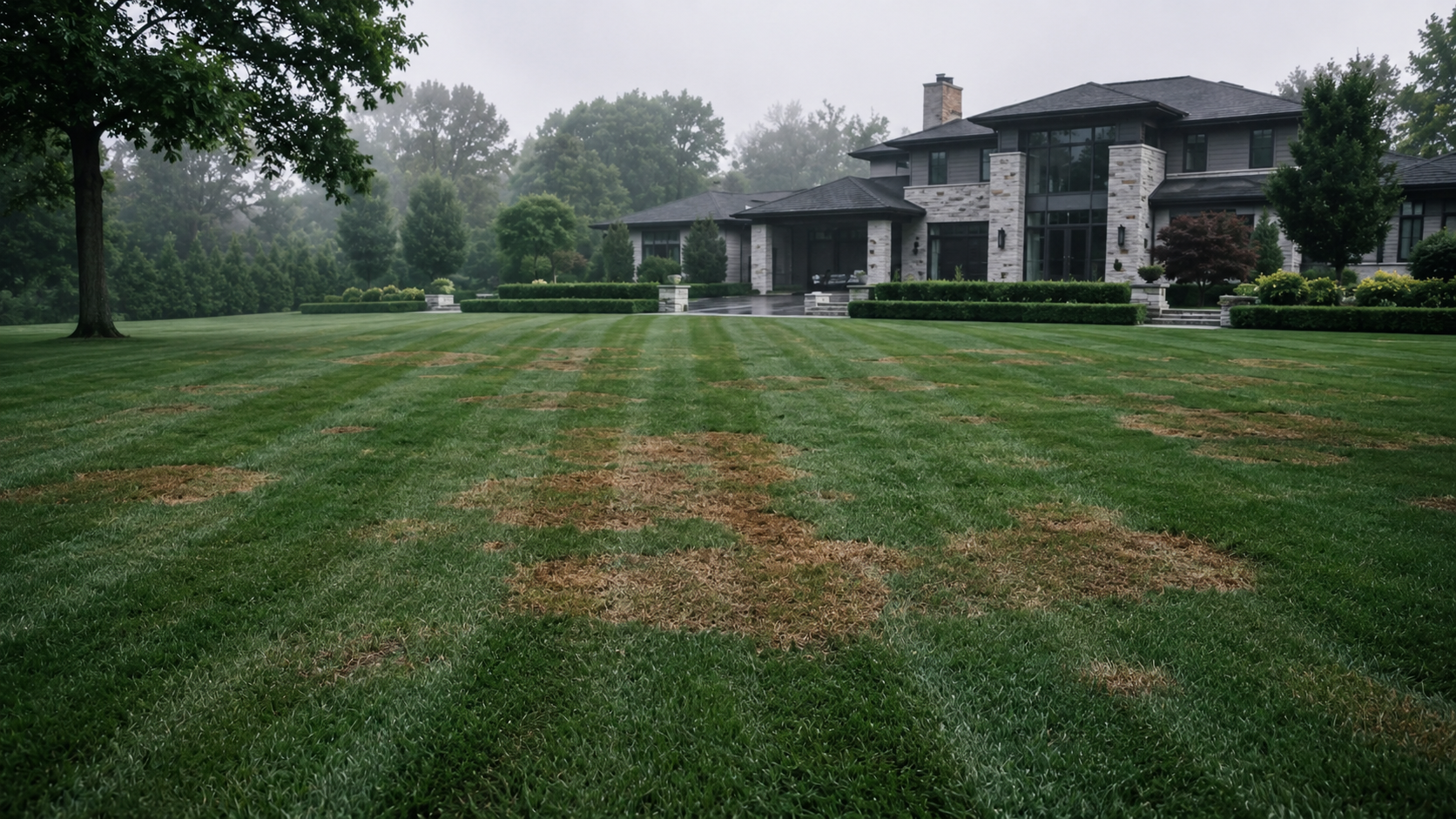
What Lawn Grubs Are and Why They Damage Middle Tennessee Lawns
Lawn grubs are the larval stage of several beetle species, most commonly Japanese beetles, June beetles, and masked chafer beetles in Middle Tennessee. The adult beetles lay eggs in lawn soil during early summer. Eggs hatch into white C-shaped larvae that feed on grass roots throughout late summer and fall. Heavy grub populations destroy entire sections of lawn by severing roots, leaving the dead grass to be peeled back like loose carpet.
Most lawns have a baseline population of a few grubs per square foot without showing damage. The damage threshold is typically 6 to 10 grubs per square foot, though some grass types tolerate higher counts than others. Cool-season Fescue lawns show damage at lower populations because Fescue has a shallower root system than warm-season grasses.
This guide covers how to identify grub damage, when to scout for grubs, what treatments actually work, and how to prevent infestations before they cause visible damage to your Nashville, Brentwood, Franklin, or Murfreesboro lawn.
How to Identify Grub Damage in Your Lawn
Grub damage often gets mistaken for drought stress, disease, or chemical burn. The key identifiers are different:
The Pull Test
Healthy grass resists being pulled out of the ground. Grass with severed roots from grub feeding lifts up easily, often coming up in sheets. If you can pull back a section of brown grass like a piece of sod, grubs have severed the roots beneath it. This is the single most reliable diagnostic test.
Increased Animal Activity
Skunks, raccoons, armadillos, crows, and starlings dig up lawns hunting for grubs. Sudden new digging activity, especially during evening and overnight hours, often signals a grub population large enough to attract predators. The animals do additional damage on top of what the grubs cause.
Irregular Brown Patches
Grub damage appears as irregular dead patches that expand over weeks. The patches don't follow the circular pattern of fungal disease. They often appear first in sunny, dry areas where adult beetles preferred to lay eggs the previous summer.
The Soil Inspection
The definitive identification requires checking soil directly. Cut a square-foot section of turf 2 to 3 inches deep at the edge of a damaged area. Count the white C-shaped larvae in the soil. Six or more grubs in a square foot indicates a treatable infestation. Fewer than 3 grubs means the damage is likely from another cause.
The Grub Life Cycle in Middle Tennessee
Understanding when grubs are active determines treatment timing:
June through July: Adult beetles emerge from the soil where they overwintered as pupae. They mate, feed on plant foliage (Japanese beetles famously damage ornamental plants during this stage), and females lay eggs in moist soil. Lawns being watered during dry spells attract more egg-laying than dry lawns.
July through August: Eggs hatch into small first-instar larvae. These young grubs are highly vulnerable to insecticides because their skin is thin and they're feeding actively near the soil surface. This is the optimal preventative treatment window.
August through October: Grubs grow rapidly through second and third instar stages, reaching full size of about an inch long. This is when visible damage typically appears. Curative insecticides work but are less effective than preventative treatments would have been.
November through February: Grubs move deeper into the soil to overwinter below frost line. They're inactive and largely beyond the reach of surface insecticides. This is why fall treatments after frost are usually ineffective.
March through May: Grubs move back toward the surface and resume light feeding before pupating. Some lawn damage can occur during this period, but populations are typically lower than in fall because predators and winter mortality have reduced numbers.
Late May through June: Pupation, followed by adult beetle emergence. The cycle begins again.
Preventative Grub Treatment: The Right Approach
Preventative grub control applies an insecticide before grubs hatch from eggs, targeting the vulnerable young larvae as they begin feeding. Applications are timed for late June through mid-July in Middle Tennessee, before egg hatch is complete.
Common preventative active ingredients include chlorantraniliprole (Acelepryn), imidacloprid (Merit), and clothianidin (Arena). Of these, chlorantraniliprole has the longest residual control (often 4 months) and the most favorable environmental profile. It's now the standard active ingredient in commercial preventative programs.
Preventative treatment is most effective when:
- The lawn has a history of grub damage. Past damage indicates the property's microclimate, soil type, and adjacent vegetation favor beetle egg-laying.
- Adjacent properties have grub damage. Beetles fly between yards, so neighborhood pressure matters.
- The lawn is actively irrigated during peak egg-laying weeks. Moist soil dramatically increases egg-laying compared to dry soil.
- Significant Japanese beetle activity is visible on nearby ornamental plants in June. The adult beetles you see on roses and crape myrtles are the egg-layers.
Preventative treatment is generally not necessary for lawns with no history of grub damage, no observed beetle pressure, and no irrigation through summer.
Curative Grub Treatment: When You See Damage
If you discover grub damage in late summer or early fall, curative treatment can still help. The active ingredients differ from preventative products because mature grubs are larger and more resistant.
Effective curative active ingredients include trichlorfon (Dylox), which kills larger grubs within 1 to 3 days when applied correctly. Carbaryl (Sevin) provides similar quick knockdown. These products require immediate, heavy irrigation after application to move the active ingredient through the thatch and into the soil where grubs are feeding.
Curative treatment is most effective when:
- Applied between mid-August and mid-October. Outside this window, grubs are either too small (early summer) or too deep (after frost) for surface-applied insecticides.
- Followed by heavy irrigation immediately. Half an inch of water within 24 hours is typically required to activate the insecticide.
- Grub counts are confirmed above threshold. Treating without confirming an active infestation wastes product and creates unnecessary pesticide exposure.
What Doesn't Work for Grubs
Several commonly recommended grub treatments don't actually deliver results:
Milky spore disease (Paenibacillus popilliae). This bacterial pathogen targets Japanese beetle grubs specifically. Research shows it provides minimal field-level control in Tennessee soils. The bacterial spore needs years of population buildup and works best in alkaline soils, neither of which describes most Middle Tennessee lawns.
Beneficial nematodes (Heterorhabditis bacteriophora). These microscopic worms attack grubs in laboratory settings. Field results are inconsistent due to nematode sensitivity to soil temperature, moisture, and UV exposure. Most homeowners see little benefit even with proper application.
Dish soap solutions. Some online sources recommend soap-water mixtures to flush grubs to the surface. This identifies grubs (the soap irritates them and brings them up where birds find them) but doesn't kill them in numbers sufficient for control.
Coffee grounds, beer traps, and home remedies. None have measurable effect on grub populations in residential lawns.
Late fall or winter treatment. Once soil temperatures drop below 50°F, grubs move below treatment depth. Applications during this period have no measurable effect.
How Grub Damage Differs from Other Lawn Problems
Grubs vs. Drought Stress
Drought-stressed grass turns gray-green then brown but stays firmly rooted. Grub-damaged grass turns brown and pulls up easily. The pull test is the fastest way to distinguish them.
Grubs vs. Lawn Disease
Disease typically appears in circular or irregular patches with distinct edges, often with visible fungal growth in early morning. Grub damage shows no fungal structures. Disease damage doesn't lift like sod.
Grubs vs. Chinch Bug Damage
Chinch bugs primarily damage Bermuda and Zoysia lawns in sunny, hot areas. They suck plant juices rather than chewing roots. Affected grass stays rooted but yellows and dies in irregular patches. Grub damage primarily affects Fescue and shows the characteristic lift-up pattern.
Grubs vs. Vole Damage
Voles create surface runways through the lawn, visible as winding pathways of disturbed grass. Grub damage creates patches, not pathways.
Lawn Recovery After Grub Damage
Once grubs are controlled, the affected areas need help to recover. Recovery steps depend on damage severity:
Light damage (under 25% of patch area): Treat grubs, water consistently, fertilize lightly. The remaining grass will often spread to fill in small dead areas, especially in Bermuda and Zoysia lawns that spread through stolons.
Moderate damage (25% to 50% of patch area): Treat grubs, then aerate and overseed (Fescue) or topdress with topsoil and reseed/resod (warm-season grasses). Recovery takes 4 to 8 weeks during active growing seasons.
Severe damage (over 50% of patch area): Sod replacement is often more practical than trying to renovate. Remove damaged turf, treat soil, lay new sod. Skip the grub treatment in newly sodded areas since the new sod doesn't have grubs.
Preventing Future Grub Infestations
Long-term grub management combines treatment with cultural practices that reduce egg-laying pressure:
Reduce summer irrigation when possible. Adult beetles strongly prefer moist soil for egg-laying. Lawns that go semi-dormant during summer drought attract fewer egg-layers than heavily irrigated lawns. This isn't always practical (active lawns in Bermuda and Zoysia need irrigation for color), but it's a factor worth considering.
Maintain dense turf. Beetles prefer thin or stressed turf for egg-laying. Lawns kept dense through proper fertilization, mowing height, and disease control receive fewer eggs.
Treat preventatively in years following damage. Properties with confirmed grub history benefit from 2 to 3 years of preventative treatment to reduce the local beetle population.
Address adjacent beetle sources. Japanese beetle traps in neighboring yards can actually increase grub pressure on your lawn by attracting more beetles to the area. Conversely, properties bordering wooded areas, fields, or other beetle habitat may need consistent preventative treatment.
Pure Turf's Approach to Grub Control in Middle Tennessee
Pure Turf's standard lawn care program includes optional preventative grub control timed for late June through mid-July, the optimal application window for Middle Tennessee. The treatment uses chlorantraniliprole as the primary active ingredient, providing 4 months of protection through the peak feeding period.
For properties without grub history, treatment is recommended only when confirmed infestation appears or when adjacent properties show damage. For properties with confirmed past damage, preventative treatment becomes part of the standard program for at least 2 consecutive years to reduce local beetle populations.
Curative treatment is available when damage is identified in late summer or fall. This is more reactive than preventative treatment and produces better results when caught early. Lawn recovery support, including aeration, overseeding, or sod replacement, can be scheduled to follow treatment when significant damage has occurred.
Frequently Asked Questions
How do I know if I have grubs in my lawn?
The most reliable test is to cut a square-foot section of turf 2 to 3 inches deep at the edge of any suspicious patch and count the white C-shaped larvae underneath. Six or more grubs in a square foot indicates a treatable population. Increased skunk or armadillo digging activity is another strong signal that grub populations are high enough to attract predators.
When is the best time to treat for grubs in Tennessee?
For preventative treatment, late June through mid-July is optimal. This catches young grubs immediately after egg hatch when they're most vulnerable. For curative treatment after damage appears, mid-August through mid-October works when application is followed immediately by heavy irrigation. Treatment outside these windows is significantly less effective.
Will grubs come back after treatment?
One treatment kills the current grub population but doesn't prevent next year's beetle eggs from being laid. Properties with grub history typically benefit from 2 to 3 consecutive years of preventative treatment to reduce the local beetle population. After that, monitoring and selective treatment usually maintains control.
Are grub treatments safe for pets?
Modern grub control active ingredients (especially chlorantraniliprole) have very low toxicity to mammals and have been specifically selected for residential lawn use. Pets can typically return to the lawn after the treatment has dried, usually within 1 to 2 hours after irrigation. Always read specific product labels for re-entry timing.
Can I treat grubs myself?
Retail grub control products are available at home improvement stores, but they often contain less effective active ingredients than commercial products, and proper application requires calibrated equipment and immediate irrigation. Many homeowners apply products incorrectly, water-in too little, or treat outside the optimal window. The cost of a wasted DIY treatment often approaches the cost of professional service.
How much grub damage is too much to recover from?
Light to moderate damage usually recovers within a single growing season with treatment and overseeding. Severe damage (more than half the affected area showing dead grass) is often more practically addressed with sod replacement than renovation. The decision often comes down to lawn size and your timeline for full recovery.
Does drought protect my lawn from grubs?
Yes, somewhat. Adult beetles strongly prefer moist soil for egg-laying. Lawns that go semi-dormant during summer drought attract significantly fewer beetles than heavily irrigated lawns. This isn't a practical strategy for all lawns, but it's a real factor for properties willing to let Fescue go dormant in July and August.
Are Japanese beetle traps a good idea?
Generally no. Research has shown that pheromone-based beetle traps attract more beetles to your property than they catch. Beetles that aren't trapped lay eggs in your lawn, potentially increasing grub pressure. Traps make more sense for monitoring beetle pressure than for active control.
Getting Grub Damage Diagnosed in Middle Tennessee
If you're seeing patches of dead grass that lift up easily, increased nighttime animal activity, or visible white grubs when you dig into damaged areas, professional diagnosis can confirm whether treatment is needed and what approach will work for your specific situation. Pure Turf provides free lawn evaluations across Nashville, Brentwood, Franklin, Murfreesboro, Spring Hill, Mt. Juliet, and surrounding Middle Tennessee communities. Evaluations include grub population sampling, damage assessment, and a treatment recommendation specific to your grass type and current lawn condition.
Related posts
Take your lawn to the next level.

Best Time for Fall Aeration in Nashville Lawn Care

.svg)