
.avif)
.png)
.jpg)
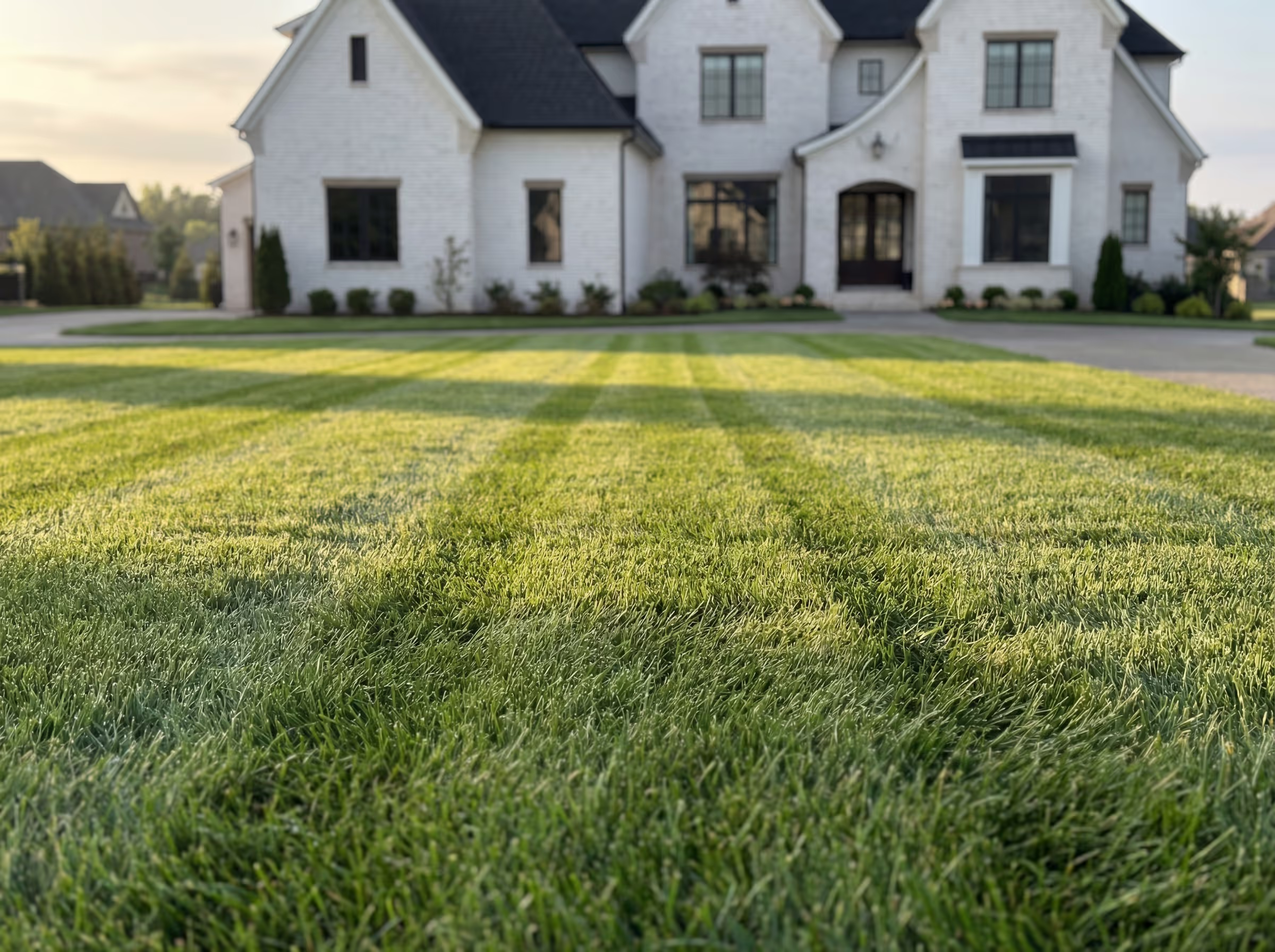

Stand in the seed aisle of any big-box store in September and you'll see bags promising a thick, green lawn in no time, with a picture of perfect turf on the front. Turn the bag over, though, and the story can be very different. Picking the right grass seed for a Middle Tennessee lawn isn't hard once you know what to look for, and what to walk past.
Why Tall Fescue Is the Best Grass Seed for Nashville Lawns
Nashville sits in the transition zone, the band of the country that's too hot in summer for most cool-season grasses and too cold in winter for many warm-season ones. Of the grasses you can grow from seed here, tall fescue handles that squeeze best. It tolerates our summer heat better than other cool-season grasses, roots deeper into heavy clay, holds its color through most of the winter, and handles moderate shade.
That's why most seeded lawns in Middle Tennessee are tall fescue. Today's turf-type tall fescues are a long way from the coarse, clumpy pasture grass of decades past: finer blades, darker color, and better disease resistance.
Blends beat single varieties
A blend is a mix of several tall fescue varieties. Each brings its own strengths: one may handle heat better, another resists disease, another holds up in shade. If one variety struggles in a given summer, the others carry the lawn. For most yards, a quality tall fescue blend is the right call. Some shade mixes add a portion of fine fescue for dry spots under trees.
What About Bermuda and Zoysia?
Bermuda and zoysia are warm-season grasses, and most of the varieties people want on a home lawn are planted as sod, sprigs, or plugs rather than seed. Some common Bermuda and a few zoysia types are sold as seed, but they go in during late spring or early summer when the soil is warm, not in fall, and zoysia from seed is slow to fill in. And if you already have a Bermuda or zoysia lawn, don't overseed it with fescue. (More on telling them apart in our fescue vs Bermuda guide.)
The Trouble With Cheap Box-Store Mixes
Many bargain mixes lean heavily on annual ryegrass. It sprouts in days, which feels like success. The catch is right in the name: it's annual. It dies off in our summer heat, often leaving bare spots exactly where you seeded. While it's alive, it competes with the fescue seedlings you actually want. Some bags also carry a lot of filler and heavy coating, so part of what you're buying isn't seed at all.
How to Read a Seed Label
Every bag of grass seed is required to carry a label, usually on the back or side. Here's what to check:
- Variety names and percentages. You want named tall fescue varieties at the top of the list, not annual ryegrass or a vague "variety not stated."
- Germination. The share of seed expected to sprout. Higher is better, and good tall fescue commonly lists 85 percent or more.
- Weed seed. This should be as close to zero as possible. Quality seed often lists a small fraction of a percent.
- Other crop seed. Seed from grasses that weren't meant to be in the bag. Again, lower is better.
- Inert matter. Chaff, dust, and coating. It isn't seed, so it won't grow.
- Test date. Germination drops as seed ages, so look for a recent test date.
How Much Seed, and When
For tall fescue, a common rule of thumb is roughly 6 to 8 pounds per 1,000 square feet on bare soil, and about half that when overseeding an existing lawn. More isn't better. Seed sown too thick competes with itself and is more prone to disease.
Timing matters as much as the seed. In Middle Tennessee, the window is early September into October. The soil is still warm enough for quick germination, the air is cooling off, and new seedlings get two good growing seasons, fall and spring, before their first summer. Spring seeding is a gamble: seedlings face the heat with shallow roots, and a spring pre-emergent will stop grass seed right along with the crabgrass (see pre-emergent vs post-emergent).
Seed needs soil contact
Seed scattered on top of hard clay mostly washes away or feeds the birds. Aerating first opens holes where seed lands in real soil, and keeping the seedbed consistently moist for the first few weeks is what brings it up.
If you'd rather not gamble in the seed aisle, our Signature Aeration & Seeding pairs core and liquid aeration with a Middle Tennessee cultivar mix dropped straight into the open holes, plus a preventive fungicide to protect the new seedlings, all in one fall visit. Get your free estimate. No contracts, no surprises.
Related guides: Aeration & overseeding in Tennessee · How to fix bare spots in your lawn · Growing grass in shade
Related posts
Take your lawn to the next level.
.jpg)
What These 4 Tennessee Weeds Have in Common

.svg)