

.avif)

.png)
.jpg)



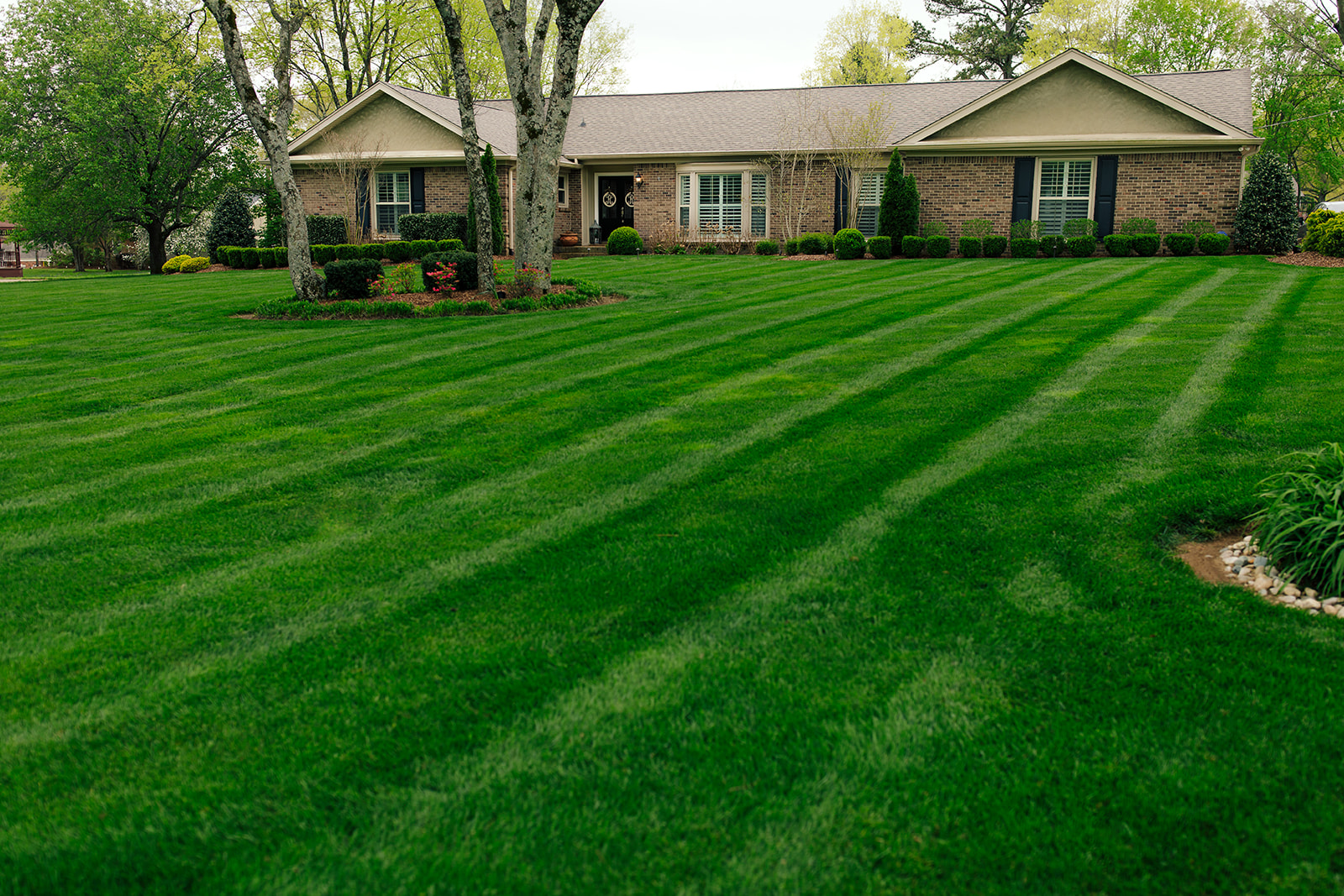
Drive through any neighborhood in Franklin, Brentwood, or Murfreesboro and you'll see it: two houses side by side, same soil, same weather, and one lawn looks great while the other struggles. Usually the difference isn't money or luck. It's a handful of small, common lawn care mistakes that add up over a season. Here are the ten we see most often in Middle Tennessee, and what to do instead.
Mowing and Watering Mistakes
1. Mowing too short
Short grass looks tidy for about a day. Then it stresses, thins, and lets sunlight reach weed seeds in the soil. Tall fescue should be mowed at 3.5 to 4 inches. Bermuda does best at 1 to 2 inches, and zoysia at 1 to 2.5 inches. Never take off more than a third of the blade at once. (Our mowing height guide has the details.)
2. Watering a little every day
Short daily watering keeps the top inch damp, so roots stay shallow and weed seeds get the moisture they love. Lawns need about 1 inch of water per week in summer, counting rain. Water deeply one to three times a week, early in the morning, so roots chase moisture down into the soil.
3. Bagging clippings for no reason
Clippings break down fast and return nutrients to the soil. They don't cause thatch. Unless the grass got very long, you're mowing over diseased areas, or you're picking up leaves in the fall, let them fall back into the lawn.
4. Mowing with a dull blade
A dull blade tears grass instead of cutting it. The ragged tips turn brown, the lawn takes on a grayish cast, and those torn edges give disease an easy way in. Sharpen the blade at least once or twice a season.
Timing Mistakes
5. Seeding fescue in the spring
Spring seed comes up, looks great in May, and then a lot of it dies in July. Young fescue simply hasn't built enough root to survive a Middle Tennessee summer. Spring pre-emergent also blocks grass seed. Seed fescue in September and October instead.
6. Missing the pre-emergent window
Crabgrass germinates once soil temperatures hold in the mid-50s, often between early March and early April, sometimes earlier after a warm February. A pre-emergent barrier has to be down before that happens. Put it down in April and you've largely missed it. (See crabgrass control in Tennessee.)
7. Fertilizing fescue in July
Fescue is a cool-season grass that slows down in summer heat. Pushing it with heavy nitrogen in July forces growth it can't support and can make problems like brown patch worse. Feed fescue mostly in the fall. Bermuda and zoysia are the opposite: they want their feeding from late spring through summer.
Soil and Diagnosis Mistakes
8. Skipping aeration on clay soil
Our heavy clay compacts under mowing, foot traffic, and summer heat. Compacted soil sheds water, starves roots of air, and keeps fertilizer from reaching where it's needed. Core aeration in the fall, ideally paired with overseeding on fescue lawns, opens it back up. (More in signs of soil compaction.)
9. Guessing instead of soil testing
Lime, fertilizer, and "lawn food" bought on a hunch often fix problems you don't have and miss the ones you do. Most lawns grow best with a soil pH roughly between 6 and 7. A soil test tells you where yours sits and what's actually missing, so you stop paying for guesses.
10. Treating symptoms instead of causes
A brown patch could be disease, grubs, armyworms, drought, dog urine, or that dull mower blade. Spraying weeds in a thin lawn without fixing why it's thin means they'll be back next year. The lasting fix is figuring out the cause first, then treating that.
The Pattern Behind the Mistakes
Look back over the list and a theme shows up. Most of these come down to timing and guessing. In Middle Tennessee, the windows are narrow and the right move for fescue is often the wrong move for Bermuda. A few habits fix a lot at once:
- Know your grass type and follow its calendar.
- Mow high with a sharp blade and water deep.
- Test the soil before you buy anything.
- Aerate and seed fescue in the fall, protect it in the spring.
If you'd rather not keep track of every window yourself, our fertilization and weed control programs start with a soil test and are timed to the season and your grass type, so the big mistakes get taken off the table. Get your free estimate. No contracts, no surprises.
Related guides: Why your lawn isn't responding to treatment · Year-round lawn care in Middle Tennessee
Related posts
Take your lawn to the next level.

What Is Lawn Aeration? A Complete Guide for Middle Tennessee Homeowners

.svg)