.avif)
.png)
.jpg)
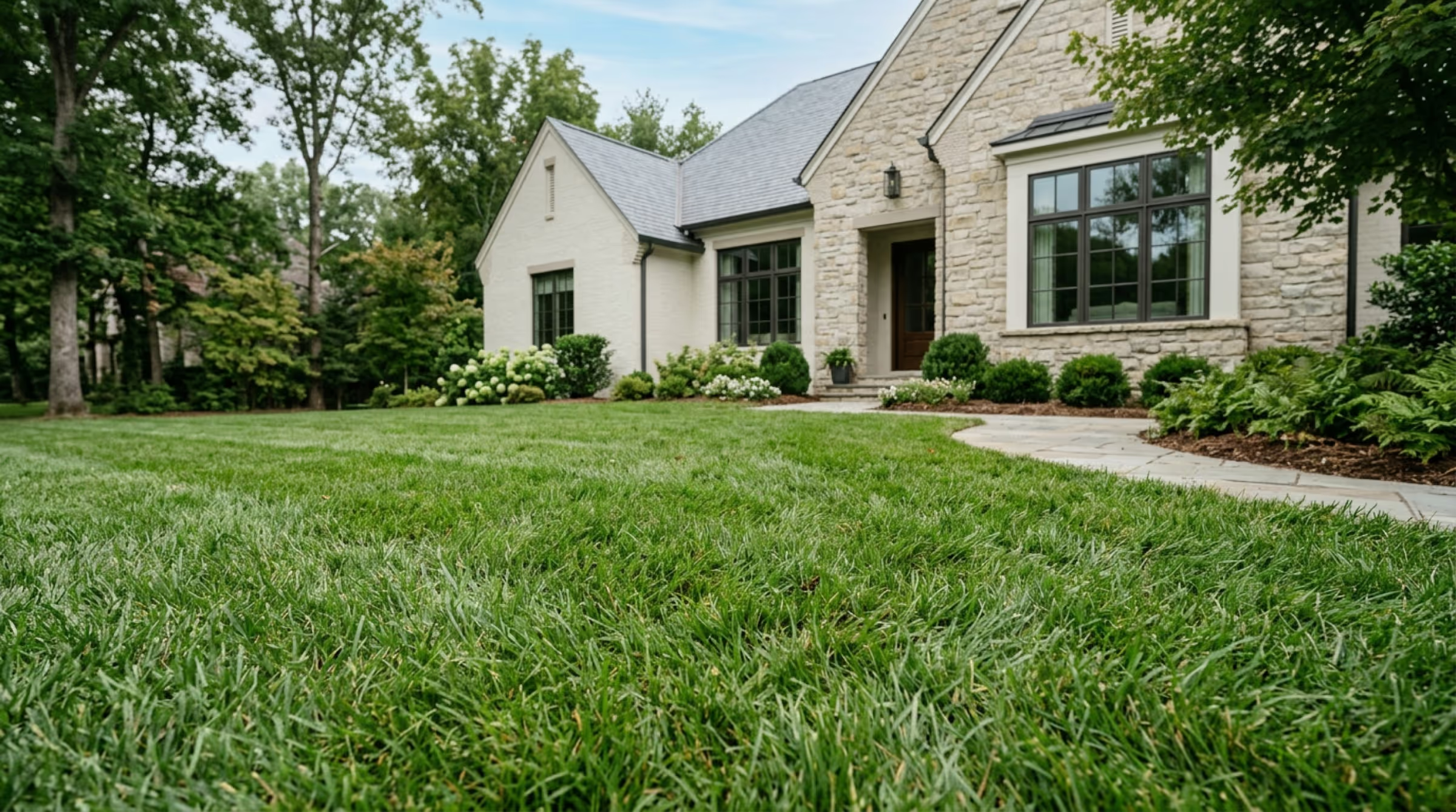

Every lawn in Middle Tennessee fights roughly the same eight weeds. Learn to recognize them and you'll know why they showed up, what actually controls them, and — just as useful — which treatments are a waste of your Saturday. This is the field guide our technicians carry in their heads. For the bigger picture of how these treatments fit together across the year, start with our complete Middle Tennessee weed control guide.
Crabgrass
Spot it: A sprawling, wiry grass that grows in a star-shaped clump, flat to the ground, with wide blades that are noticeably lighter green than fescue. Shows up along driveways, curbs, and any thin, hot spot from late spring on.
Why it's there: Crabgrass is a summer annual — it dies at frost, but each plant drops thousands of seeds that germinate the following spring once soil temperatures hit the mid-50s.
Beat it: Pre-emergent in late winter is the whole game. Once crabgrass is established and tillering in summer, post-emergent control is possible but slow and expensive by comparison. Our guide on pre-emergent vs post-emergent timing covers the windows.
White Clover
Spot it: Three round leaflets, often with a pale crescent, and white puffball flowers that bees love. Spreads in patches that stay green even when the lawn browns out.
Why it's there: Clover thrives in under-fertilized lawns — it makes its own nitrogen, so poor soil that starves grass doesn't bother it at all.
Beat it: A selective broadleaf herbicide in spring or fall, plus regular fertilization. A well-fed lawn out-competes clover; that's why clover slowly disappears from lawns on a fertilization and weed control program.
Dandelion
Spot it: The one everybody knows — rosette of jagged leaves, yellow flower, gray seed puff.
Why it's there: A perennial with a deep taproot. Pulling the top just prunes it; any root left behind regrows.
Beat it: Selective broadleaf herbicide while it's actively growing, spring or fall. Fall applications are quietly more effective — the plant is pulling energy down into the taproot and carries the herbicide with it.
Henbit and Chickweed
Spot them: The winter annuals. Henbit has square stems and purple flowers — it's the purple haze across Middle Tennessee fields every March. Chickweed is a low, sprawling mat of small bright-green leaves with tiny white flowers.
Why they're there: Both germinate in September and October, grow quietly through winter, then explode in early spring.
Beat them: The early-fall pre-emergent window. By the time you see them blooming in March, the battle was lost six months earlier — spring post-emergent cleanup works, but they've already dropped next year's seed.
Nutsedge
Spot it: Looks like grass at a glance, but grows faster and taller than everything around it, with glossy, V-creased blades on a triangular stem — roll it between your fingers and you'll feel the edges.
Why it's there: It loves the wet spots — poor drainage, over-watered zones, low areas in our clay soil.
Beat it: Regular broadleaf and crabgrass products do nothing to it. Nutsedge needs a sedge-specific herbicide, and usually more than one application, because it regrows from underground tubers. Fixing the drainage or watering pattern matters as much as the spray.
Wild Violet
Spot it: Heart-shaped, waxy leaves and small purple flowers in spring, usually in shady, moist areas.
Why it's there: One of the toughest lawn weeds in Tennessee — a perennial with thick underground rhizomes and a waxy leaf coating that sheds herbicide.
Beat it: Persistence. Repeated targeted applications in fall, when the plant is moving energy to its roots, gradually wear it down. One-and-done treatments fail on violets every time.
Spurge
Spot it: A low, fast-spreading summer mat with small oval leaves, often with a maroon spot, and milky sap when you break a stem. Loves hot, thin, compacted areas.
Why it's there: Spurge germinates in warm soil all summer long, so a single early application can't cover its whole season.
Beat it: Pre-emergent helps early; summer escapes need post-emergent spot treatment. Because it favors compacted soil, aeration and thicker turf shrink its habitat year over year.
The Pattern Behind All Eight
Notice the theme: every weed exploits a weakness — thin turf, poor soil, bad drainage, missed timing windows. Spraying treats the symptom. A program that combines correctly-timed applications with a thicker, healthier lawn treats the cause. That's the approach behind our fertilization and weed control program, and it's why lawns on the program need less herbicide every year, not more. Questions about what's growing in your yard? Request a free estimate and we'll identify it on the spot.
Related posts
Take your lawn to the next level.

5 Common Diseases Affecting Tennessee Lawns (and how to prevent them)
.svg)