
.avif)
.png)
.jpg)
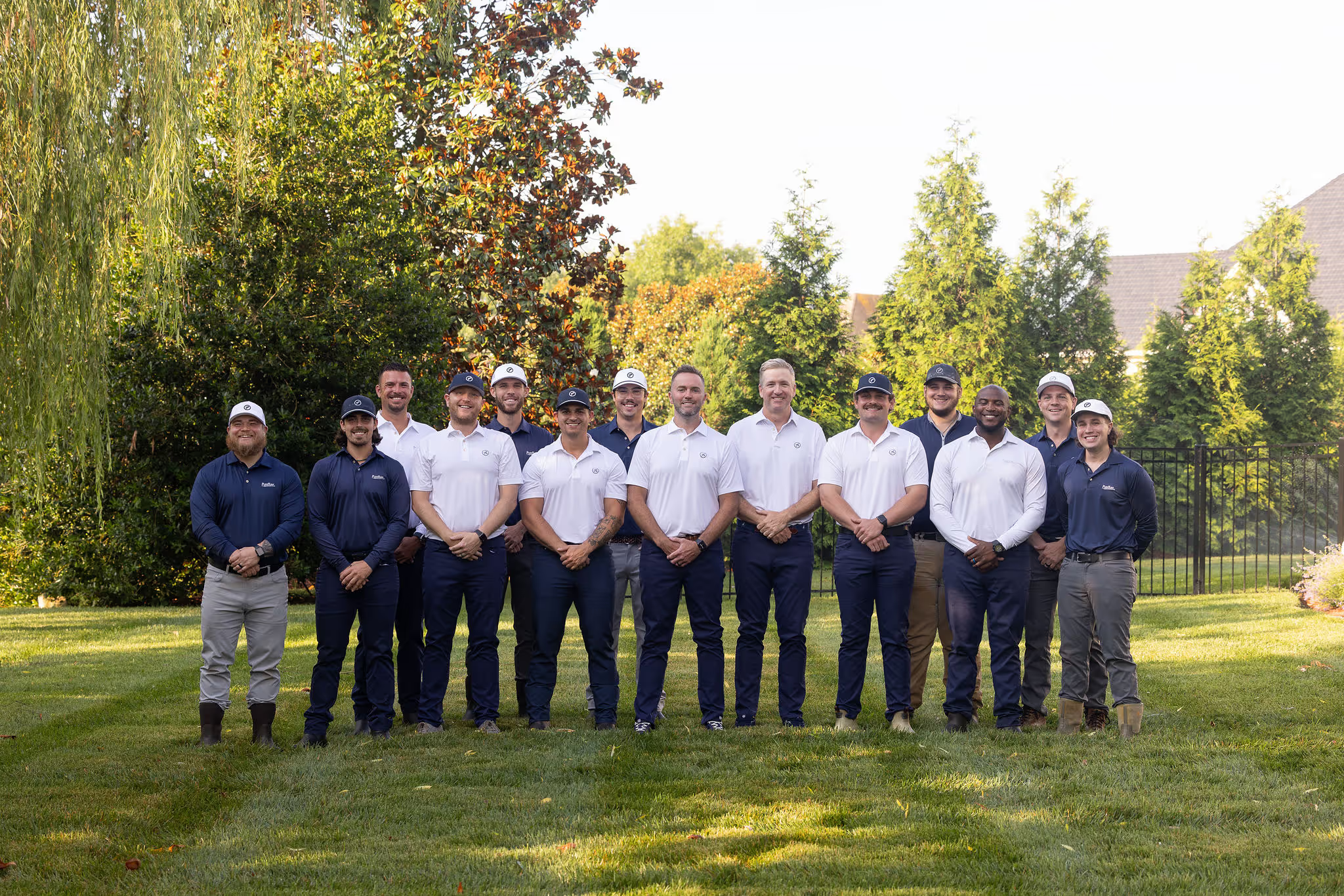

The technician just finished, and the kids are already asking if they can go back outside. The dog is standing at the back door. It's one of the most common questions we hear, and the general answer is simple: for most liquid lawn treatments, keep people and pets off the grass until it's dry. Here's a bit more detail on that, plus the questions that usually come right after it: watering, mowing, and what happens if it rains.
How Long to Stay Off the Lawn After Treatment
The general guidance on most lawn product labels is to keep kids and pets off treated areas until a liquid application has dried. How long that takes depends on the day. On a warm, sunny, breezy afternoon, a lawn can dry fairly quickly. On a cool, cloudy, humid morning, it takes longer. Touch the grass blades: if they're still wet, give it more time.
Granular products, the small pellets, work a little differently. Many of them need to be watered in so the granules dissolve and move down into the soil. The usual guidance is to water them in, then let the lawn dry before it gets heavy use again.
The most important rule is the simplest one: follow the instructions your technician leaves and the product label. Different products carry different directions, and your technician will tell you what applies to the treatment that just went down. If you're not sure, ask. That's what we're there for.
A few easy habits on treatment day
- Pick up toys, balls, and pet bowls from the yard before the visit.
- Let the dog out for a bathroom break before the technician arrives.
- Keep kids and pets inside while the application is going on and until the lawn is dry.
- If the dog wanders onto damp grass anyway, wipe its paws and check the notes left for you.
- Point out any vegetable gardens, play areas, or fish ponds so your technician knows where they are.
Should I Water After a Lawn Treatment?
It depends on what was applied, which is one more reason to read what your technician leaves.
- Liquid weed control works through the leaves of the weeds. It needs time to dry on the leaf and soak in, so as a general rule, hold off on watering for about a day.
- Granular fertilizer and pre-emergent do their work in the soil. Watering them in, or a gentle rain, helps them get there.
- Fungicides vary. Some need to stay on the leaf, others need to reach the root zone. Follow the notes for your visit.
If you have an irrigation system on a timer, check when it's set to run. A sprinkler that kicks on an hour after a liquid weed treatment can undo some of the work.
Mowing Before and After Treatment
Weeds need leaf surface to absorb a weed treatment. Mow right before the visit and there's less leaf to treat; mow right after and you clip off treated leaves before the product has done its job. A good general rhythm is to mow a few days before your visit and wait a couple of days after.
Whenever you do mow, keep the height up: 3.5 to 4 inches for tall fescue, 1 to 2 inches for Bermuda. Taller grass crowds out weeds on its own. (More on that in our guide to mowing height in Middle Tennessee.) Some labels also say not to use clippings from a freshly treated lawn as mulch or compost for a while, so check your notes before you dump the bag in the garden.
What If It Rains After a Lawn Treatment?
A good lawn care provider watches the forecast and avoids spraying right before a storm, but Middle Tennessee weather doesn't always follow the forecast.
- Rain after a liquid treatment has dried usually isn't a problem.
- A heavy downpour soon after a liquid weed treatment, before it dried, can wash some of it off and make it less effective. You may see weeds that hang on longer than expected.
- Rain after granular fertilizer or pre-emergent is often a help, since those need water to move into the soil.
If a storm rolls in right after your visit, give us a call and we'll talk through whether anything needs another look.
The Bottom Line
Most of this comes down to two habits: let liquid treatments dry before the lawn gets used, and read what your technician leaves behind. If you want to know more about how sprayed treatments work in the first place, our guide to lawn spraying in Middle Tennessee explains it in plain terms.
Knowing what's going on your lawn makes all of this easier. On our fertilization and weed control programs, your technician lets you know what was applied and what to do afterward, and you can always call with a question. Get your free estimate. No contracts, no surprises.
Related guides: What to expect as a Pure Turf customer · Dog urine spots on your lawn · Lawn fertilization in Tennessee
Related posts
Take your lawn to the next level.
The Best Time to Aerate a Lawn in Tennessee: A Month-by-Month Guide
.svg)