




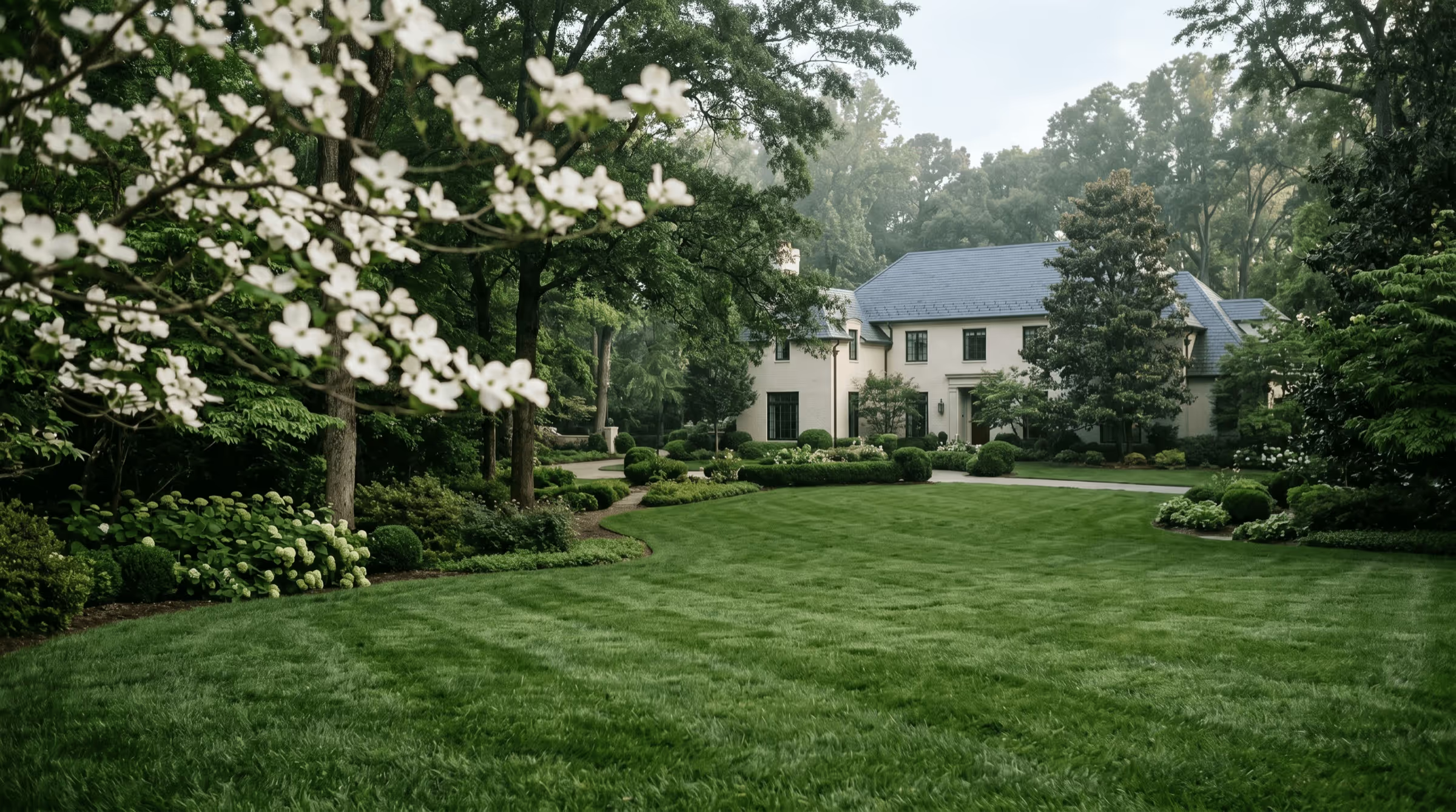

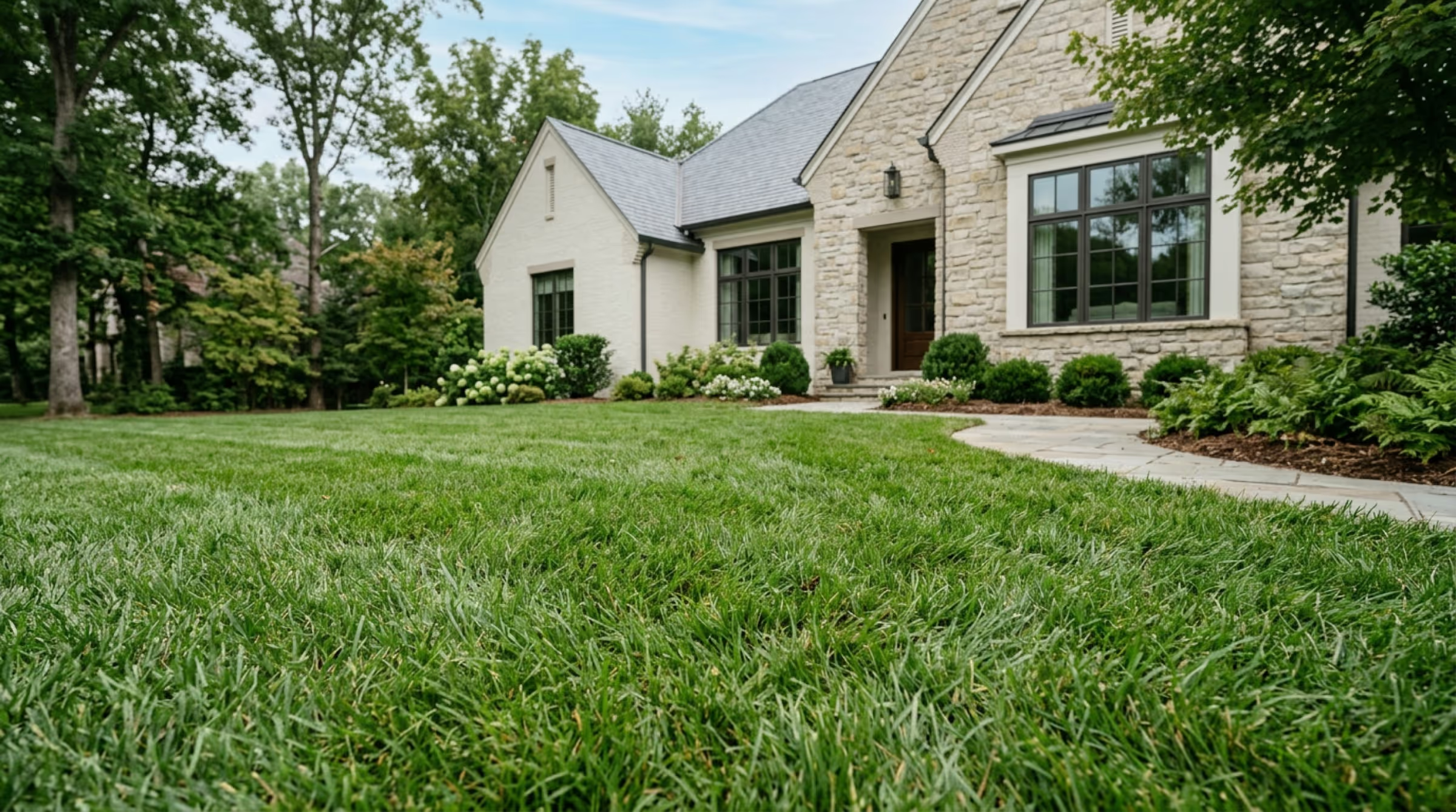
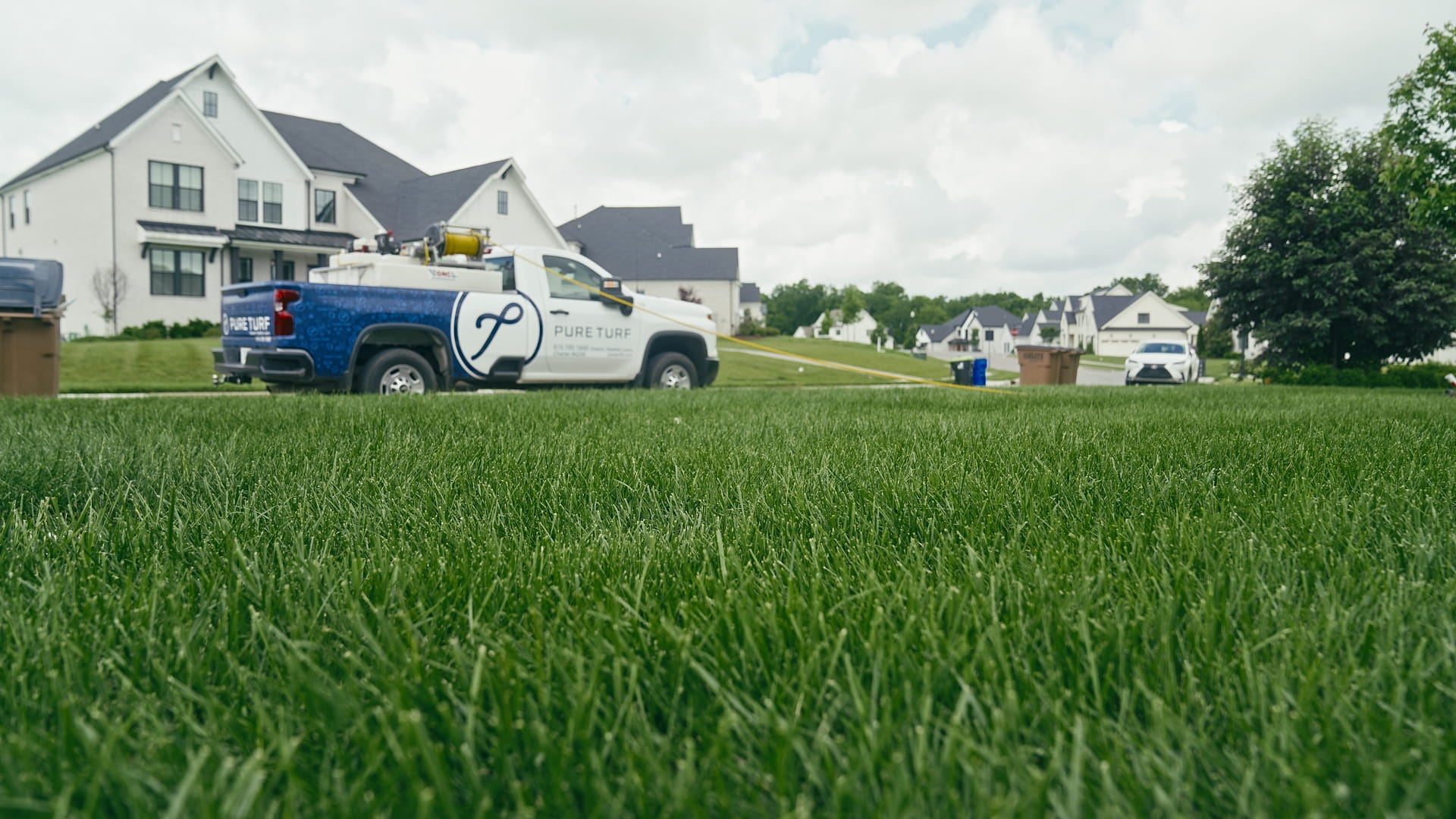
It's Saturday morning, you're standing in the garden center aisle, and there are forty bags of lawn products in front of you. Some promise to kill weeds, some promise to feed, some promise both. You can absolutely take care of your own lawn. Plenty of Nashville homeowners do it well. The real question is which parts are worth doing yourself and where a professional actually earns their keep. Here's an honest look at both sides.
What DIY Does Well
Some of the most important lawn care happens between treatments, and nobody does it better than the person who lives there. If you handle these well, you're already ahead of most lawns on the street:
- Mowing. Mowing tall fescue at 3.5 to 4 inches with a sharp blade does more for weed control and drought tolerance than almost any product.
- Watering. You're home to see when the lawn is thirsty. Deep, less frequent watering, about 1 inch per week in summer counting rain, is a habit only you can keep.
- Noticing changes. You see the brown patch by the driveway the day it shows up. Early eyes catch problems while they're still small.
- Small jobs. Pulling a few weeds, raking leaves off the grass in fall, and keeping the kids' soccer goal moving so one spot doesn't get worn bare.
If you enjoy it, DIY can also just be satisfying. There's nothing wrong with wanting to do it yourself.
Where DIY Usually Goes Wrong
Most DIY lawns don't struggle because of effort. They struggle because a few things are harder than the bag makes them look.
Timing windows
Lawn care in Middle Tennessee runs on narrow windows. Pre-emergent has to go down before soil temperatures hold in the mid-50s, which can land anywhere from late February to early April depending on the year. Fescue seeding belongs in September and October. Heavy nitrogen on fescue in summer can do more harm than good. Miss a window by a few weeks and the same product that would have worked does very little.
Product choice
The right product depends on your grass type, your weeds, and the season. A weed killer that's fine on fescue can damage a warm-season lawn, and a fertilizer blend built for Bermuda in June isn't what fescue needs in the fall. Guessing usually means buying the wrong bag, or the right bag at the wrong time.
Spreader calibration
Put down too much and you can burn the lawn. Too light and nothing happens. Most spreaders need to be set and checked for each product, and uneven walking creates stripes of green and stripes of yellow. It sounds minor. It's one of the most common DIY problems we see.
Diagnosing disease and pests
A brown spot could be disease, grubs, armyworms, drought, dog urine, or a dull mower blade. Each one needs a different fix, and treating the wrong one wastes a season. Telling them apart takes a trained eye and, often, a close look at the roots and soil. (See why your lawn is turning yellow for a few of the usual suspects.)
Time and Equipment
Be realistic about what DIY takes. Beyond mowing, a full year of treatments means several trips to buy product, a good spreader, a sprayer for spot treatments, storage space for bags and bottles, and time to read labels and track soil temperatures. Aeration means renting or buying a core aerator heavy enough for our clay, then hauling it home. None of this is impossible. It just adds up over a year, especially on weekends that already have plenty going on.
When a Professional Is Worth It
Hiring help makes the most sense when:
- You've done the work for a few years and the lawn still isn't where you want it.
- You keep missing the pre-emergent or fall seeding windows.
- Disease or insects keep coming back and you're not sure what you're fighting.
- The soil has never been tested and you've been guessing at lime and fertilizer.
- You'd simply rather spend your weekends on something else.
The Middle Path Most People Land On
Here's what works for a lot of families: you handle the mowing and watering, and a professional handles the treatments, the timing, and the diagnosing. We don't mow, so this split comes naturally with us. You keep doing the part you're best at, and the windows get hit on schedule. Every one of our year-round programs starts with a soil test and lawn assessment, so treatments are based on what your yard actually needs instead of a guess. If you want to see what's inside a program, our guide to professional lawn programs walks through it. Get your free estimate. No contracts, no surprises.
Related guides: New to lawn care? Start here · Common lawn care mistakes · Year-round lawn care in Middle Tennessee
Related posts
Take your lawn to the next level.
The Best Time to Aerate a Lawn in Tennessee: A Month-by-Month Guide