



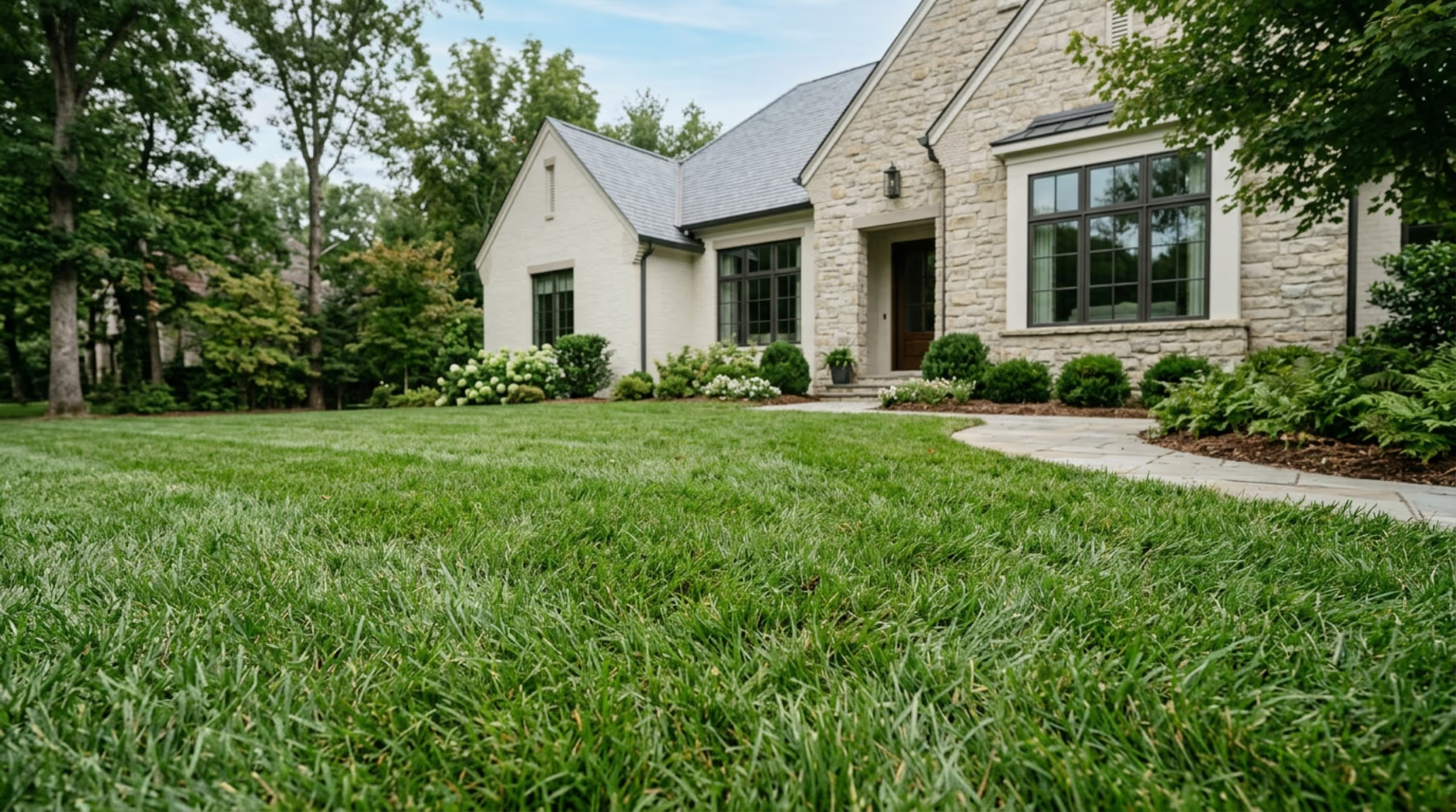
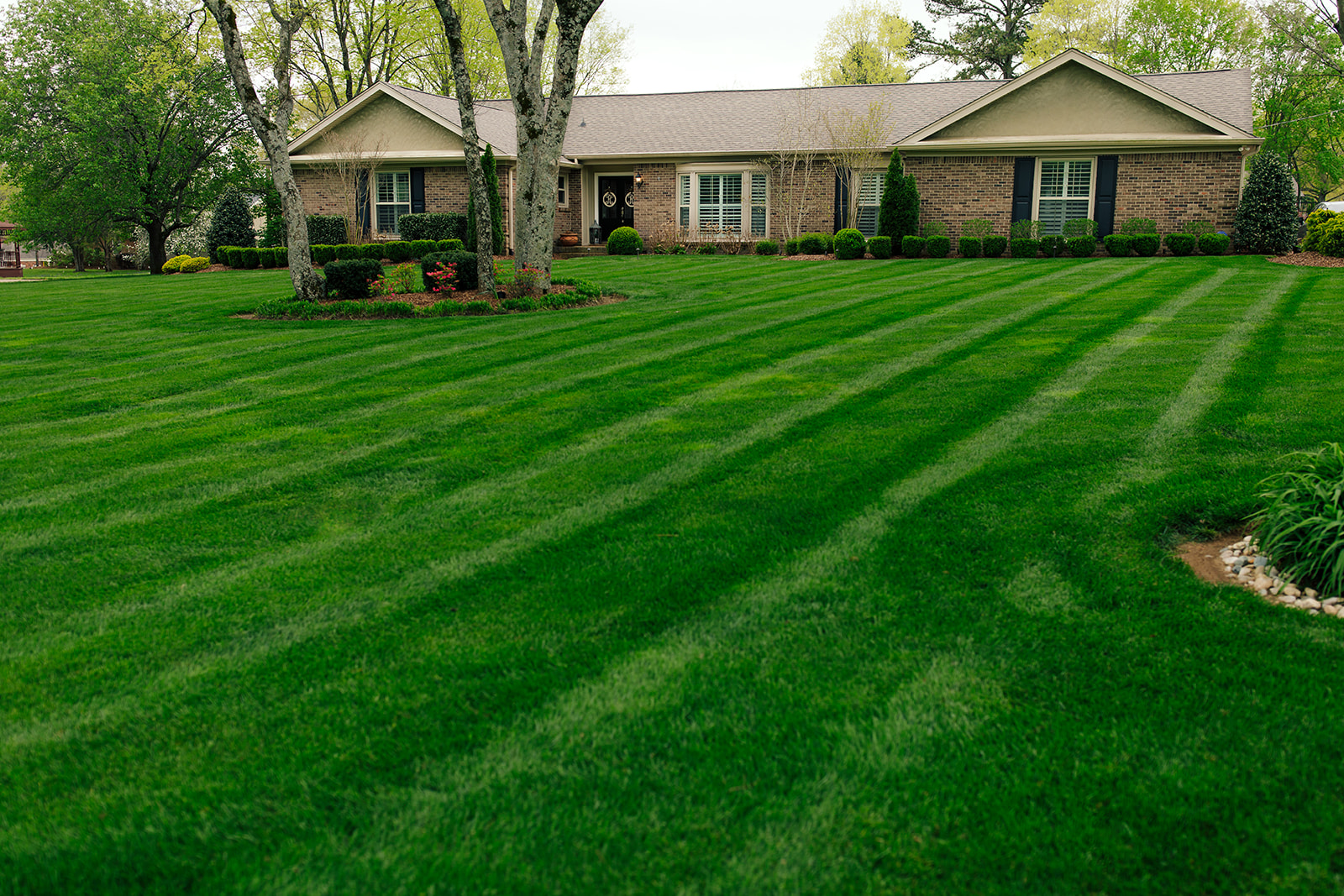
If your lawn feels like a thick carpet underfoot, stays tan from the first frost until sometime in April, and shrugs off a dry summer better than the fescue next door, you probably have zoysia. It's one of the best-looking lawns you can grow in Nashville and across Middle Tennessee. It's also a little particular, and most of the zoysia problems we see come from caring for it like fescue.
Know What You're Working With
Zoysia is a warm-season grass. It grows hard in the heat of summer, slows down in fall, and goes dormant over winter. It spreads by runners, more slowly than Bermuda, and builds a dense, stiff turf that crowds out a lot of weeds once it's established. Compared to Bermuda, it handles partial shade noticeably better, though it still wants a good amount of sun to stay thick. (Not sure which grass you have? Start with our fescue vs Bermuda guide.)
Your Zoysia Calendar for Middle Tennessee
Late winter (February to March)
The lawn is dormant and tan, and that's normal. This is the time for pre-emergent, before crabgrass and other summer weeds germinate. Clear off leaves and debris so the soil can warm up when spring arrives.
Spring green-up (April to May)
Zoysia greens up gradually as soil temperatures climb, usually through April and into May. Be patient. A lawn that looks half tan in mid-April is usually right on schedule. Hold off on fertilizer until it has fully greened up and you've mowed it a couple of times. Feeding too early mainly helps the weeds that are already awake.
Late spring through summer
This is zoysia's season. Feed it from late spring through mid-summer, in moderate amounts. Zoysia needs less nitrogen than Bermuda, and overfeeding it is one of the fastest ways to build thatch. When rain falls short, water deeply, aiming for about 1 inch per week in summer, rather than light daily sprinkles.
Late summer into fall
Taper off feeding by late summer so the grass can harden off before frost. Zoysia often holds good color well into fall, then turns tan after the first hard frost, usually somewhere in late October or November.
Mowing Height
Mow zoysia at 1 to 2.5 inches. Lower heights give a tighter, golf-course look but take more frequent mowing and a very sharp blade. Most home lawns cut with a rotary mower look best around 1.5 to 2 inches. In shadier spots, keep it toward the top of the range. Follow the one-third rule: never take off more than a third of the blade at once, or you'll scalp it down to brown stems.
Thatch: Zoysia's Weak Spot
Zoysia's tough, dense stems break down slowly, so it tends to build a spongy layer of thatch between the green blades and the soil. A thin layer is fine. Once it gets beyond about half an inch, it starts holding moisture and disease, blocking water and fertilizer, and making the lawn feel bouncy. Good zoysia maintenance keeps thatch in check by:
- Not overfeeding, especially with heavy doses of nitrogen.
- Mowing regularly, so you're never cutting off a big load of stem at once.
- Aerating to open up compacted clay and help thatch break down. For warm-season grass, that work is best done while it's actively growing in late spring or early summer.
Our guide to lawn thatch in Tennessee covers how to measure it and when to act.
What Not to Do
- Don't overseed with fescue. It's tempting when zoysia goes tan in winter, but fescue grows in clumps that never blend in, competes with the zoysia, and looks out of place all summer.
- Don't push it with fertilizer in early spring or fall. Zoysia fed out of season is more prone to winter injury and to large patch, a disease that shows up as big tan circles, sometimes with an orange edge, in spring and fall.
- Don't water at night. Grass that stays wet overnight invites disease. Water early in the morning instead.
- Don't panic over a slow spring. Zoysia rarely greens up all at once.
If large patch shows up in the same spots year after year, staying ahead of it works far better than chasing it. That's what our fungicide and disease prevention is built for.
How Shade Changes Things
Zoysia is a better choice than Bermuda for a yard with some afternoon shade, but shade tolerant isn't the same as shade loving. Under heavy tree cover it thins out. Raise the mowing height in those areas, cut back on fertilizer, and accept that a few spots may never be as dense as the sunny front yard.
Zoysia rewards a light, well-timed hand. Every one of our fertilization and weed control programs starts with a lawn assessment and soil test, so feeding and weed control line up with your grass and your soil instead of a generic schedule. Get your free estimate. No contracts, no surprises.
Related guides: Why Bermuda and zoysia lawns look great in fall · Growing grass in shade
Related posts
Take your lawn to the next level.
The Weeds Taking Over Middle Tennessee Lawns (And How to Beat Each One)