
A great lawn
is a partnership.
A lot goes into a healthy, green lawn. Some of it we handle, some of it is up to you, and one thing — the weather — is up to the good Lord. Here's how it all breaks down.
We can adjust your soil's pH and improve it a little at a time. Significant improvement isn't possible without trucking in new soil.
Weather
The multiplierWeather isn't a fixed percentage — it's a multiplier on everything else. A great lawn program in a mild spring looks like magic. That same program in a drought or a record-hot July can look like it's not working at all.
Nashville's humid subtropical climate brings hot, humid summers that stress cool-season turf (fescue) and mild winters that allow an extended growing season. The biggest weather threats are summer heat stress, late spring freezes after green-up, and fall drought that undermines overseeding.
What you can do: You can't control the weather, but you can respond to it. Adjust irrigation during dry spells, raise mowing height in summer heat, and trust the program during tough stretches. A well-built lawn recovers faster than you'd expect.
Soil Quality
22% of your lawn's healthMiddle Tennessee sits on heavy clay soil. Clay holds nutrients well but compacts easily, drains slowly, and makes it harder for roots to grow deep. Most lawns in our service area have a soil pH between 5.5 and 6.5 — slightly acidic, which fescue tolerates but doesn't love.
We can adjust pH with lime applications and improve organic matter content over time through aeration and topdressing. But meaningful structural change — turning dense clay into loamy soil — isn't realistic without importing topsoil, which is rarely cost-effective for an entire lawn.
What we do: Soil testing guides every recommendation. We adjust pH, address nutrient deficiencies, and use core aeration to fight compaction. Over two to three seasons, these incremental improvements add up.
Mowing Height & Frequency
13% of your lawn's healthThis is the single biggest thing a homeowner controls, and it's the one most people get wrong. Cutting too short — "scalping" — removes the leaf surface the plant needs to photosynthesize, stresses the root system, and opens the door for weeds and disease.
The rule: Mow tall fescue at 3.5 to 4 inches. Never remove more than one-third of the blade in a single cut. In peak growing season (spring and fall), that means mowing every 5–7 days.
Why it matters this much: A lawn mowed at 4 inches develops roots twice as deep as one mowed at 2 inches. Deeper roots mean better drought tolerance, better nutrient uptake, and a thicker canopy that naturally crowds out weeds. It's the highest-impact habit in lawn care.
Irrigation Habits
11% of your lawn's healthThe goal is 1 inch of water per week, including rainfall. Deep, infrequent watering trains roots to grow down. Frequent light watering keeps roots shallow and invites fungal disease.
Best practice: Water early morning (before 10 AM) so the turf dries before evening. Two to three sessions per week, each delivering about ⅓ to ½ inch, is better than daily sprinkles. Set a tuna can on the lawn to calibrate your sprinkler output.
Common mistakes: Watering every day for 10 minutes (too shallow), watering in the evening (promotes disease), and not accounting for rainfall (overwatering causes as many problems as underwatering).
Sharp Mower Blade
5% of your lawn's healthA dull mower blade tears the grass instead of cutting it cleanly. Torn tips turn brown within a day, giving the whole lawn a grayish haze. Worse, ragged cuts create entry points for fungal diseases like brown patch and pythium.
The fix: Sharpen your blade every 20–25 hours of mowing, or roughly every 8–10 cuts for an average residential lawn. A sharp blade makes a clean cut that heals quickly and stays green.
This is 5% of the total, but it's the easiest 5% to get right. A $15 blade sharpening twice a season makes a visible difference.
Aeration & Seeding
20% of your lawn's healthCore aeration is the single most impactful service we provide. It pulls 2–3 inch plugs from the soil, relieving compaction, improving water and nutrient penetration, and giving roots room to expand. In Middle Tennessee's clay soils, compaction is the #1 barrier to a thick lawn.
The window: Fall (mid-September through mid-October) is the only window for fescue. Soil temperatures are dropping, moisture is returning, and new seed has the full fall and winter to establish before summer stress.
Overseeding: Every aeration includes overseeding with improved tall fescue cultivars. This fills thin spots, introduces newer genetics with better disease resistance, and thickens the canopy year over year. A lawn that skips aeration and overseeding for two or three years in a row will thin noticeably.
Fertilization & Weed Control
16% of your lawn's healthFertilization and weed control work as a system, not individual treatments. Properly timed fertilizer feeds the turf so it grows thick enough to crowd out weeds naturally. Targeted herbicide applications handle what gets through.
The program: Pre-emergent goes down in early spring before soil temps hit 55°F — this prevents crabgrass and other summer annuals. Post-emergent spot treatments handle broadleaf weeds (clover, dandelion, chickweed) as they appear. Fertilizer rounds are timed to growth cycles: heavier in fall when fescue is actively growing, lighter in summer when it's under heat stress.
Why timing matters: A fertilizer application two weeks early or late can be the difference between feeding the lawn and feeding the weeds. This is where professional timing earns its keep.
Disease Prevention
9% of your lawn's healthBrown patch, dollar spot, pythium, and gray leaf spot are the most common turf diseases in Middle Tennessee. They thrive in the hot, humid conditions we see from June through August — exactly when fescue is already under heat stress.
Our approach: Preventive fungicide applications go down before disease pressure peaks, not after you see damage. By the time brown patch is visible, the fungus has been active for 10–14 days. Curative applications stop the spread but can't undo the damage.
The homeowner connection: Watering in the evening, mowing too short, and over-fertilizing in summer all increase disease risk. Your habits and our applications work together — one without the other leaves gaps.
Insect Protection
4% of your lawn's healthGrubs (white grubs, Japanese beetle larvae) and armyworms are the primary insect threats to Nashville-area lawns. Grubs feed on roots below the surface — by the time you notice brown patches that pull up like carpet, significant damage is done.
Prevention vs. reaction: A preventive grub application in early summer costs a fraction of the damage repair from an untreated infestation. Armyworms move faster — they can strip a lawn in 48 hours during a late-summer outbreak — so scouting and rapid response matter.
At 4%, insect protection is the smallest slice. But a bad grub year with no preventive treatment can set a lawn back an entire season. It's insurance, and it's worth it.
Weather & Soil
22%
Rain, heat, cold, drought — the one factor nobody controls. Soil quality determines how well your lawn processes everything else.
Homeowner Care
29%
Mowing height, frequency, irrigation habits, and a sharp blade. These are the daily and weekly habits that compound over a season.
Professional Treatment
49%
Aeration, fertilization, weed control, disease prevention, and insect protection. The science and timing that only a program delivers.
What the percentages don't show
These slices are how the pieces stack up when everything is done right. But any single one of them — done poorly enough or skipped altogether — can wreck a lawn under certain weather conditions, no matter how small its slice.
Two lawns on the same street can run the exact same program and still look nothing alike. A great lawn is never one thing. It's the soil underneath, how it's mowed and watered, and everything else on this chart working together. Get every piece right and your lawn reaches its full potential.
Most lawns are pretty straightforward, and we can have them looking incredible in a season or two. Others come with a few more challenges and take longer to figure out and dial in. We're all in either way, and we won't stop working until we've guided you to the lawn you've always wanted.
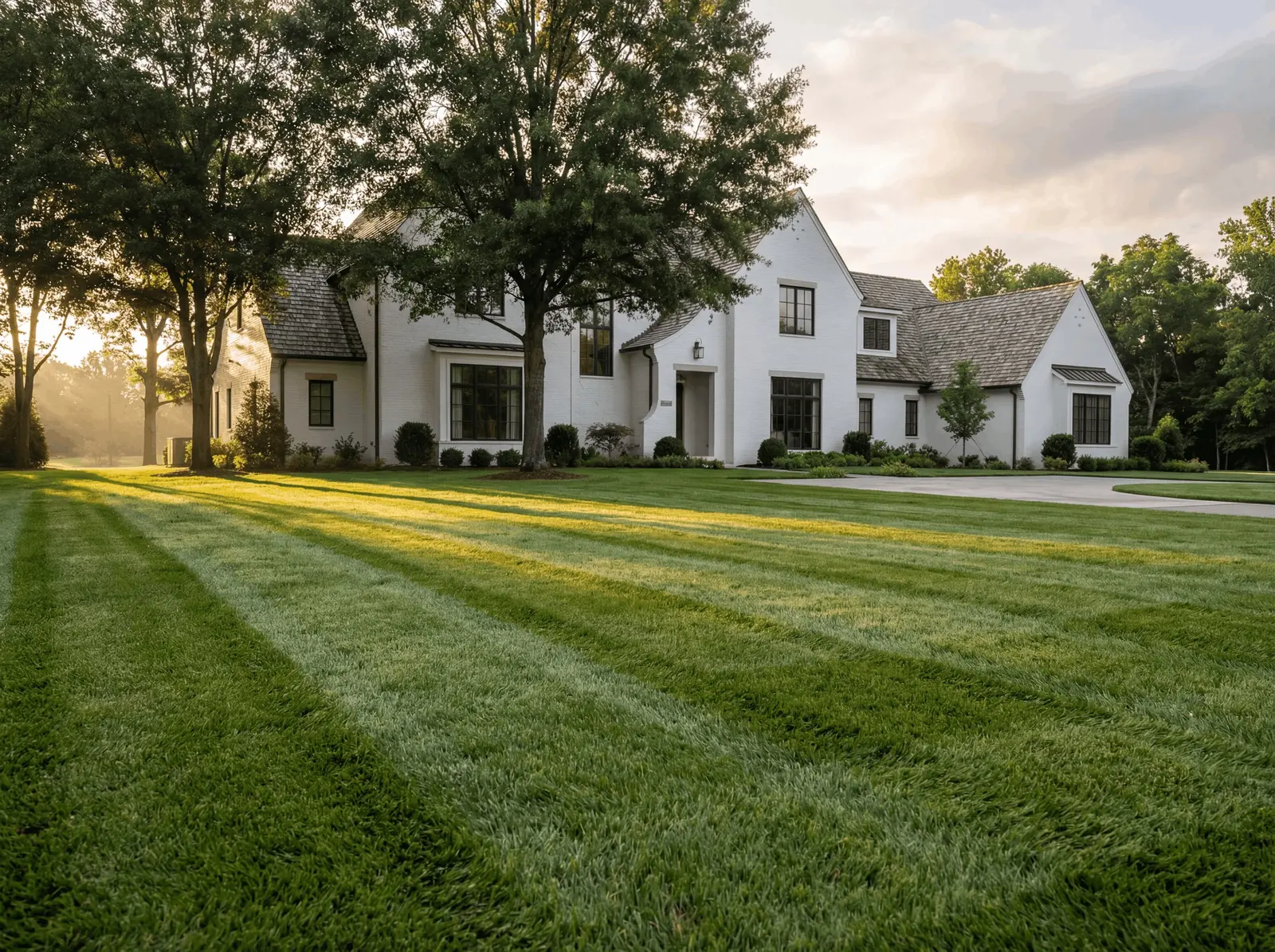
See what your lawn can become.
We'll walk your property, assess your soil, and recommend a program built around your lawn's specific needs. No contracts, no pressure.