.avif)
.png)
.jpg)
Lawn Fungus Season in Middle Tennessee
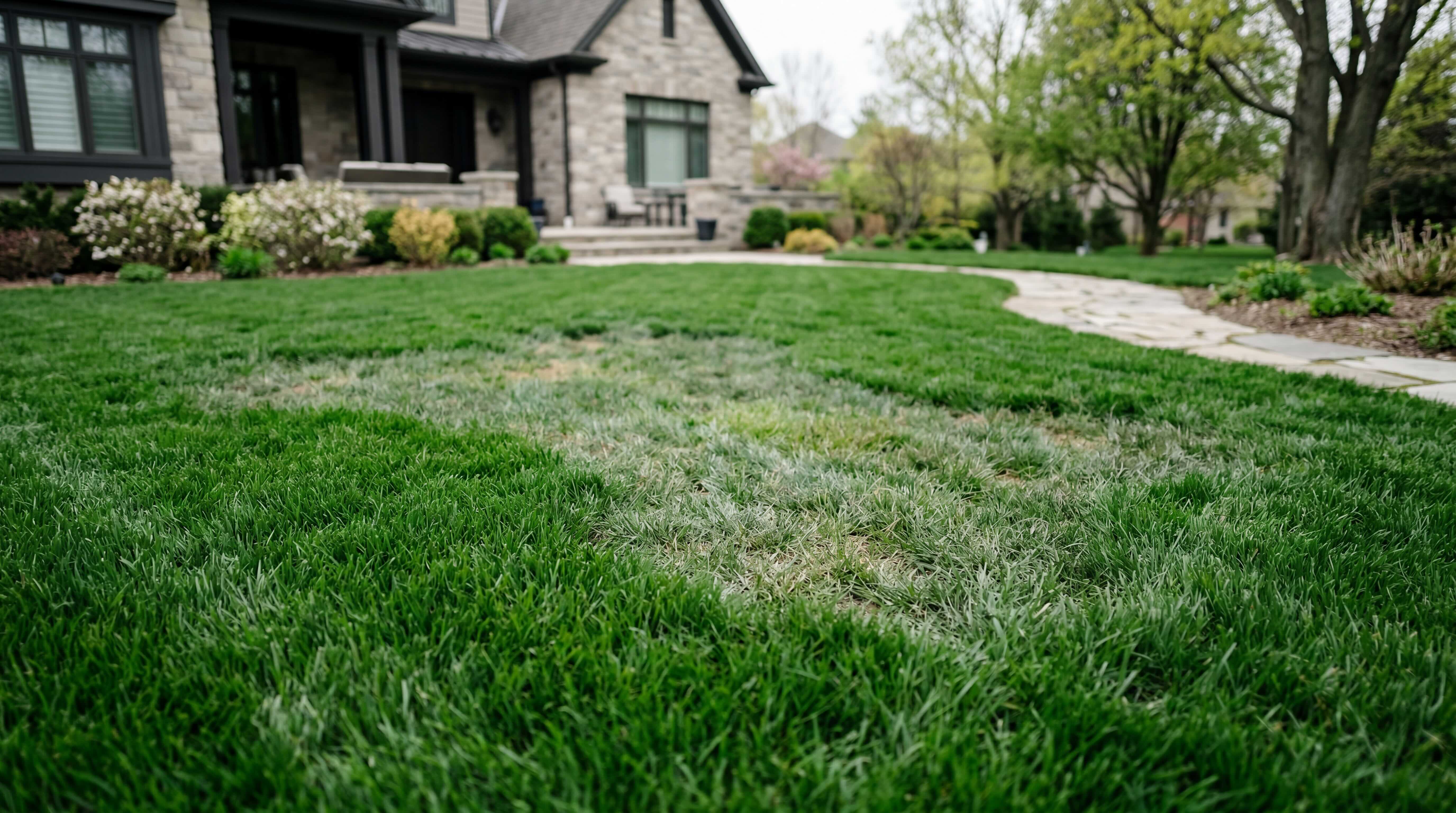
Every summer, Middle Tennessee lawns face a predictable wave of fungal disease pressure. By the time most homeowners notice the damage, including irregular brown rings, thinning patches, or mysterious dead spots, the disease has already been active for weeks. Brown patch, dollar spot, large patch, and pythium blight all thrive in the warm, humid conditions that define Nashville summers from late May through September.
Tennessee's combination of nighttime humidity, overnight dew, daytime heat, and frequent thunderstorms creates ideal conditions for soil-borne and leaf-borne fungi. The grasses commonly grown in our region, including tall fescue, Kentucky 31, hybrid Bermuda, and Zoysia, all have specific disease vulnerabilities tied to seasonal temperature shifts.
This guide covers how to identify the four most common lawn diseases in Middle Tennessee, what fungicides actually work on each, when applications should happen for prevention versus treatment, and what cultural practices help reduce disease pressure long term.
The Four Lawn Diseases You'll Actually See in Middle Tennessee
Brown Patch (Rhizoctonia solani)
Brown patch is the single most damaging disease for cool-season Fescue lawns in Tennessee. It appears as roughly circular brown patches ranging from a few inches to several feet across. The patches often have a darker "smoke ring" border in early morning when dew is still present. Affected grass blades pull out easily and may show small tan lesions with darker borders.
Brown patch activates when nighttime temperatures stay above 60°F and daytime temperatures climb above 80°F, which in Middle Tennessee typically means late May through August. High humidity, overwatering, and excessive nitrogen fertilization all increase severity.
Most effective fungicide active ingredients: azoxystrobin, propiconazole, and triadimefon. Preventative applications timed before the first night above 70°F are significantly more effective than curative applications after damage appears.
Dollar Spot (Clarireedia jacksonii)
Dollar spot creates small, silver-dollar-sized bleached patches (about 2 to 3 inches) scattered across the lawn. On closer inspection, individual grass blades show lesions with tan centers and reddish-brown borders. In heavy infections, patches merge into larger irregular dead areas.
Dollar spot is most active when nighttime temperatures fall between 60°F and 70°F with heavy dew, a pattern that occurs in Tennessee both in late spring and again in early fall. Underfertilized lawns are more susceptible than well-nourished ones, which is one reason Pure Turf's program-based fertilization schedule reduces dollar spot pressure as a side benefit.
Effective fungicides: chlorothalonil, propiconazole, and boscalid. Dollar spot can develop resistance to single active ingredients used repeatedly, so rotation between chemistry classes matters.
Large Patch (Rhizoctonia solani AG2-2 LP)
Large patch is the warm-season counterpart to brown patch, affecting Zoysia and Bermuda lawns primarily in spring and fall when soil temperatures sit between 60°F and 75°F. Circular dead patches expand outward from a central infection point, often growing several feet across over weeks. The outer edge typically shows an orange or yellow halo of dying grass.
The disease is most damaging in transition periods, when Zoysia is greening up in April and May, and again when it's preparing for dormancy in September and October. Once temperatures climb above 85°F consistently, the disease becomes inactive.
Preventative fungicide applications in early fall and again in early spring are far more effective than reactive treatment. Active ingredients include azoxystrobin, flutolanil, and pyraclostrobin.
Pythium Blight (Pythium aphanidermatum)
Pythium blight is the most aggressive lawn disease in Tennessee and can destroy large sections of Fescue lawn within 48 hours. It typically appears after heavy summer rainfall in low-lying or poorly drained areas. Affected grass first looks water-soaked and dark green, then quickly collapses into a slimy, matted texture. Cobweb-like fungal growth may be visible in early morning before dew evaporates.
Conditions that trigger pythium: overnight temperatures above 70°F, prolonged leaf wetness, and standing water. Drainage improvement is often as important as fungicide application.
Pythium requires specialized fungicide chemistry that differs from other lawn diseases. Effective active ingredients include mefenoxam and propamocarb. Standard fungicides labeled for brown patch will not control pythium.
When to Apply Fungicide: The Preventative Window
The single most important fact about lawn fungicides: they work dramatically better as preventative applications than as treatment after disease appears. Once visible damage is present, the fungus has already destroyed the grass tissue, and recovery depends primarily on the lawn's ability to grow new blades, which requires healthy crown tissue, adequate soil moisture, and time.
For Middle Tennessee, the practical schedule looks like this:
Why DIY Fungicide Applications Often Fail
Homeowners frequently buy fungicide products at retail garden centers and apply them at the recommended label rate, only to see continued disease damage. The problem usually isn't the product, it's one of these common application errors:
Wrong active ingredient for the disease. The fungicide labeled for "lawn disease" at a hardware store may be effective against brown patch but useless against pythium. Disease identification has to come before product selection.
Application timing too late. Most retail fungicides require reapplication every 14 to 21 days for sustained protection. A single application during a disease outbreak rarely provides meaningful control.
Insufficient water-in. Granular fungicides require irrigation immediately after application to move the active ingredient into the thatch layer where disease activity occurs. Skipping this step leaves the product sitting on grass blades where it provides minimal control.
Coverage gaps. Spreader patterns from consumer equipment often miss strips of lawn, creating disease refuges where the fungus continues to spread.
Single active ingredient over time. Repeated use of the same chemistry class allows resistant fungal populations to develop. Professional programs rotate between chemistry classes specifically to prevent resistance.
Cultural Practices That Reduce Disease Pressure
Fungicides are only one part of disease management. Several lawn care practices have a measurable impact on disease severity:
Mowing height. Taller grass is more disease-resistant than shorter grass. Fescue should be mowed at 3.5 to 4 inches during summer. Bermuda and Zoysia can be mowed shorter (1 to 2 inches) but should never be scalped during disease-active periods.
Watering timing. Water in early morning, ideally between 4 AM and 9 AM. This allows grass blades to dry before nighttime, dramatically reducing leaf wetness and disease pressure. Evening watering is the single worst irrigation timing in Tennessee summers.
Watering frequency. Deep, infrequent watering encourages deeper root growth and reduces surface humidity. One inch of water once or twice per week is more effective than light daily watering.
Nitrogen management. Excessive nitrogen during summer increases brown patch severity. Underfertilization increases dollar spot. Year-round balanced fertilization based on soil tests is more effective than seasonal boost applications.
Soil drainage. Areas of the lawn that hold water after rainfall are pythium hot spots. French drains, regrading, or improved soil structure through aeration can address this physical problem more effectively than repeated fungicide applications.
Pure Turf's Approach to Disease Prevention in Middle Tennessee
Pure Turf's standard fertilization and treatment program includes preventative fungicide applications timed to Tennessee's specific disease calendar. Treatments use commercial-grade fungicide chemistry not available at retail, applied with calibrated equipment for uniform coverage, and rotated between chemistry classes to prevent resistance development.
The fungicide schedule is integrated with fertilization, weed control, and soil amendment programs designed around Middle Tennessee grass varieties and seasonal patterns. Customers in our higher-tier programs receive automatic preventative coverage during high-risk windows without needing to schedule individual applications.
For homeowners managing diseases themselves, the most cost-effective single investment is timing the first preventative application correctly. Once visible damage appears, recovery often takes 4 to 8 weeks and may require overseeding or sod replacement of severely affected areas.
Frequently Asked Questions
How do I know if my lawn has fungus?
The clearest indicators are patches of grass that turn brown or thin out in roughly circular patterns, often with distinct edges. Disease damage typically appears suddenly (over days) rather than gradually (over weeks). If individual grass blades pull out easily and show small lesions with colored borders, fungus is the likely cause. Drought damage, by contrast, develops more uniformly across the lawn and the grass blades remain firmly rooted.
What's the best fungicide for brown patch?
Azoxystrobin (sold under brand names including Heritage and Scotts DiseaseEx) is the most effective single active ingredient for brown patch on cool-season lawns. Propiconazole offers a different chemistry class for resistance rotation. The most effective long-term approach is preventative application before disease appears, with rotation between azoxystrobin and propiconazole every 21 to 28 days through summer.
Can I treat lawn fungus organically?
Several non-synthetic options exist with varying effectiveness. Neem oil and copper-based fungicides provide some control for early-stage infections. Compost tea applications can improve soil microbial diversity in ways that reduce disease pressure. However, organic options typically don't match synthetic fungicide effectiveness during peak disease pressure, and they require more frequent application. Many homeowners use organic methods as a baseline with targeted synthetic applications during high-risk windows.
Will lawn fungus spread to my whole yard?
Most lawn diseases can spread under the right conditions, but spread rate varies significantly by disease and weather. Dollar spot tends to stay relatively localized. Brown patch can expand several feet per week during peak humidity. Pythium blight can destroy large sections in 24 to 48 hours if conditions are right. Early identification and intervention dramatically limit spread.
Is lawn fungus dangerous to pets or children?
The fungi themselves are not toxic to pets or people through skin contact. However, severely diseased grass becomes structurally weakened and may not recover from foot traffic, so reducing activity on affected areas helps recovery. Most fungicides used in residential lawn care have minimal toxicity once dried but read product labels for specific re-entry timing.
How long does fungicide last?
Most commercial systemic fungicides provide 21 to 28 days of protection per application. Some longer-residual products extend this to 45 days or more. Contact fungicides (which sit on the leaf surface rather than absorbing into the plant) provide 7 to 14 days of protection and require more frequent reapplication. Heavy rainfall within 24 hours of application can reduce residual effectiveness.
Should I water more or less when my lawn has fungus?
Less, in most cases. Disease pressure increases with leaf wetness, so reducing irrigation frequency (while maintaining adequate total moisture) often helps. Water only in early morning, water deeply rather than lightly, and avoid watering on days with heavy rain forecast. Allowing the lawn surface to dry between waterings reduces fungal activity significantly.
Getting Help with Lawn Disease in Middle Tennessee
If you're seeing patches in your lawn and aren't sure what's causing them, accurate identification is the most important first step. The same brown patch that looks like a disease problem can also be caused by grub damage, soil compaction, scalping, or chemical burn, and each has a completely different solution.
Pure Turf serves homeowners throughout Middle Tennessee including Nashville, Brentwood, Franklin, Murfreesboro, Spring Hill, Mt. Juliet, and the surrounding communities. Free lawn evaluations include disease identification and a treatment recommendation specific to your grass type and lawn conditions.
Related posts
Take your lawn to the next level.

Does Your Lawn Get Enough Water? Rainfall & Irrigation Tips for Nashville, TN

.svg)